Exhibition
April 18 – June 5, 2026
Al Held Foundation
Boiceville, NY
Koyoltzintli:
How to Play a Broken Bone
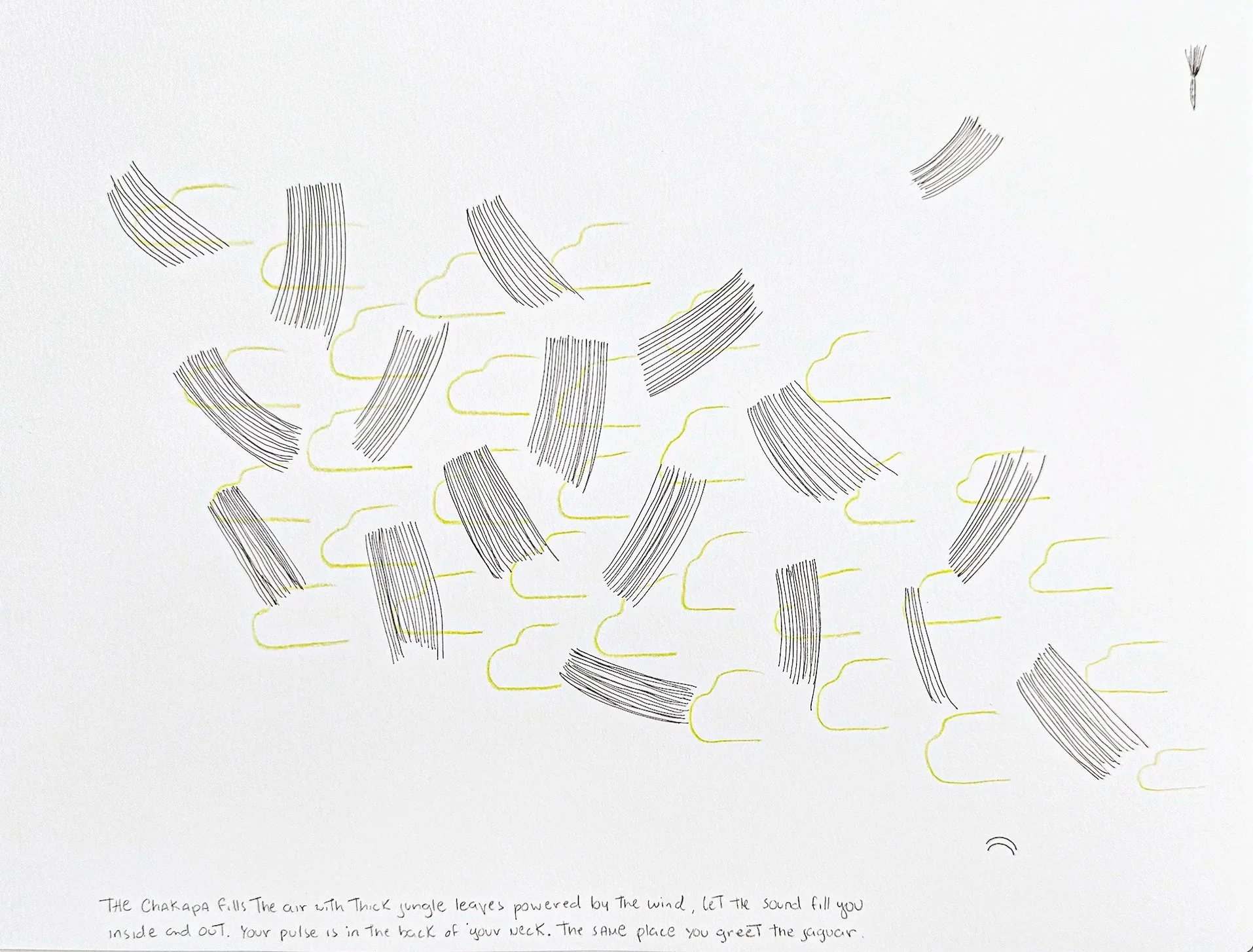
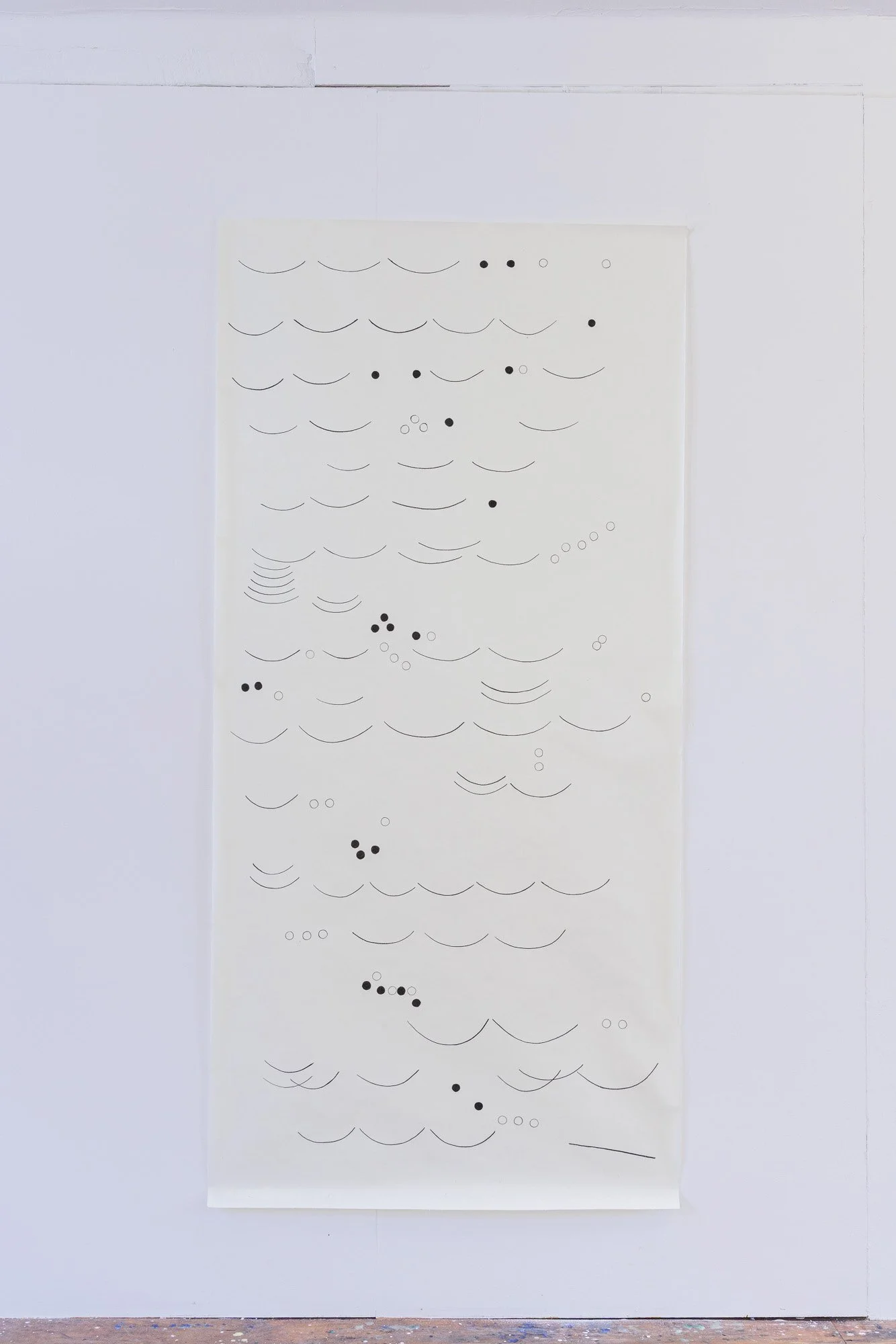
Koyoltzintli, The chakapa fills the air with thick jungle leaves powered by the wind [Let the sound fill you inside and out. Your pulse is in the back of your neck. The same place you greet the jaguar], 2025, pen and color pencil on paper, 10.5 x 14 inches. Image courtesy of the artist.
CLICK HERE to schedule your visit.
CLICK HERE for the checklist.
CLICK HERE to view the exhibition.
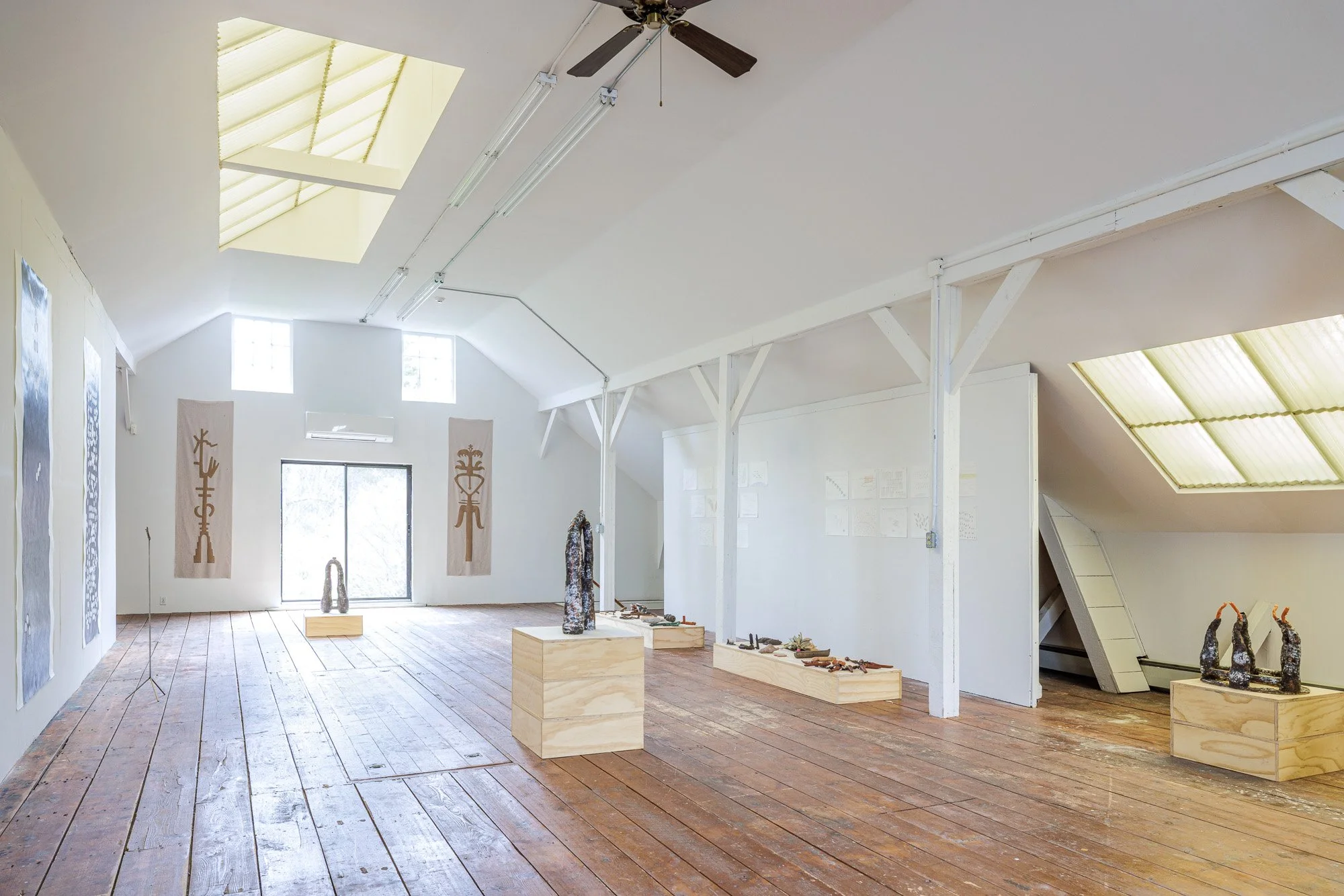
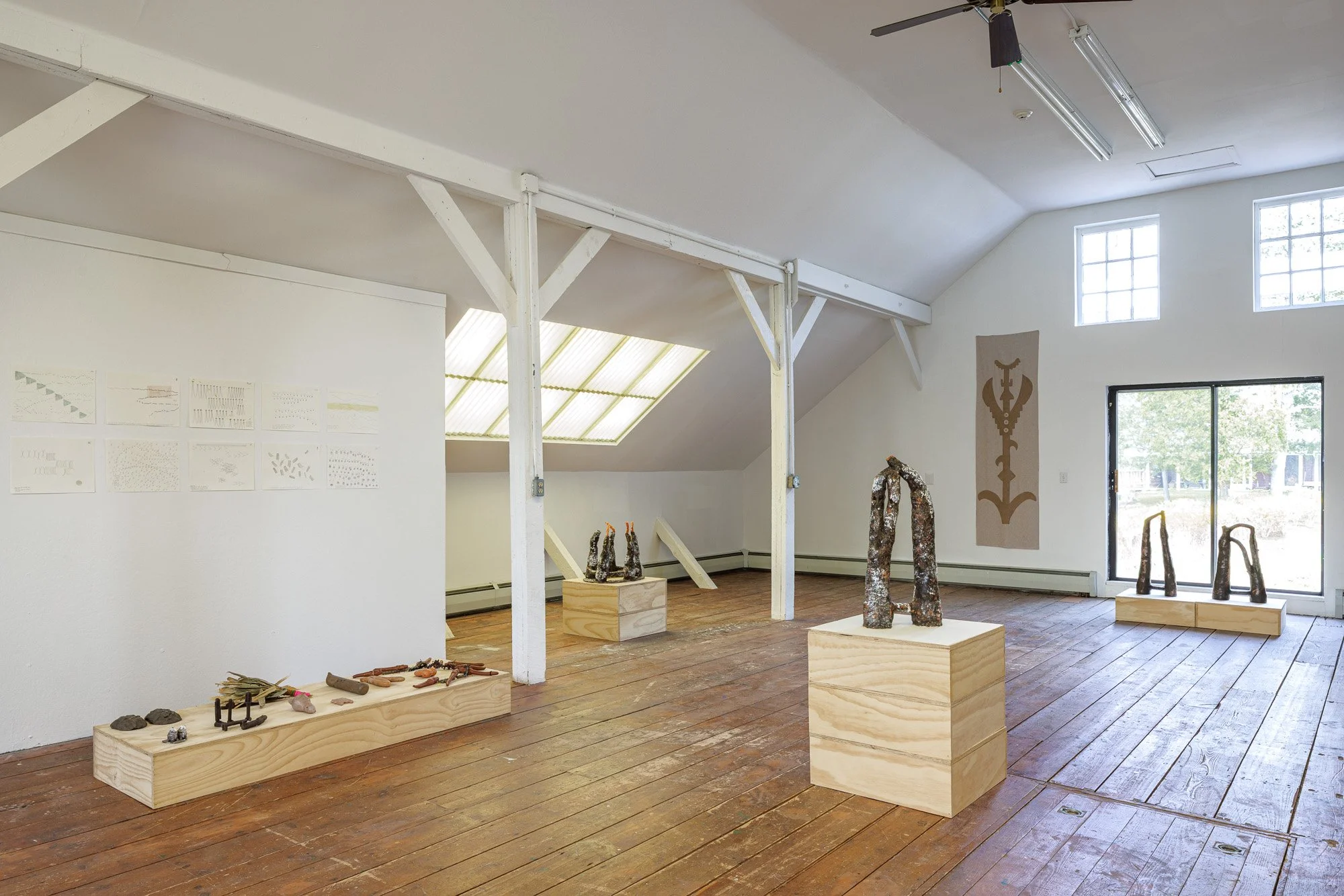
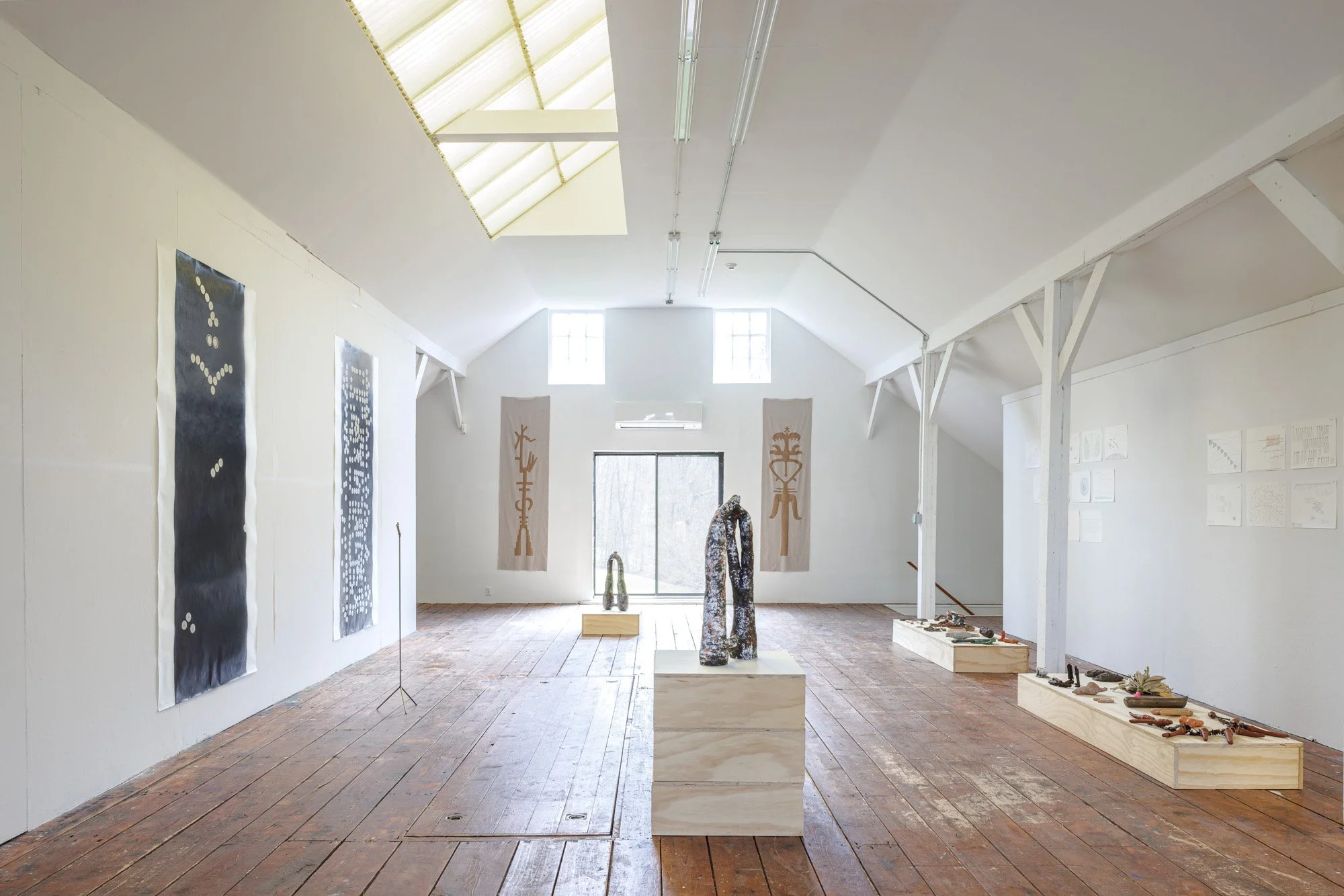
River Valley Arts Collective is pleased to inaugurate our 2026 season with Koyoltzintli's solo exhibition, How to Play a Broken Bone. Curated by Jess Wilcox and staged in Al Held’s former drawing studio, the artist's newest body of work emerges from an investigation into a small, three-inch Chancay flute.
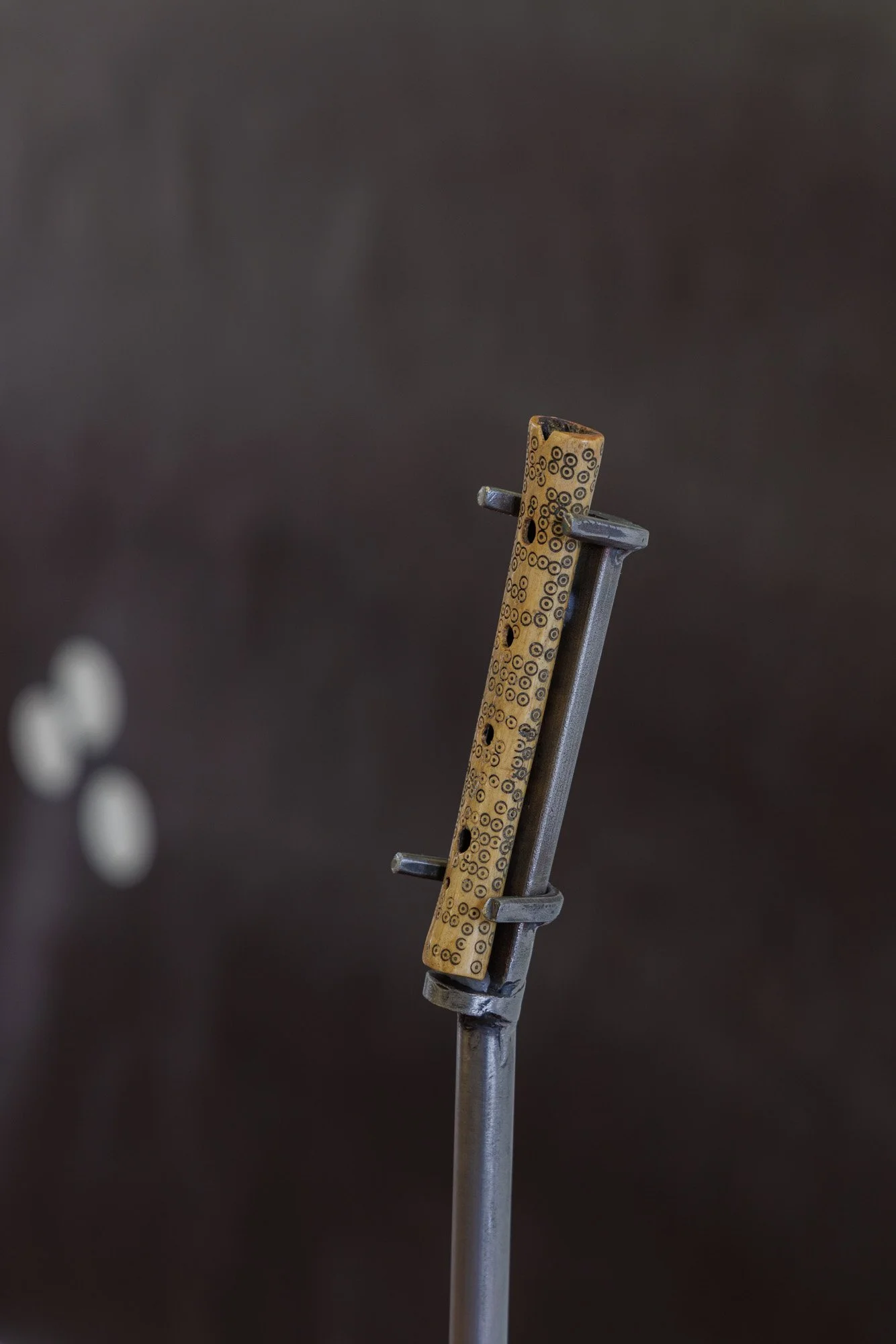
Dating to the Chancay civilization (ca. 1000–1470 AD) of the coastal region of present-day Peru, the bird bone flute bears incised circular markings that the artist speculates may function as a musical score, a constellation chart, or a diagram for ritual practice. Procured from a private collector, the instrument had not been played in decades. When the artist breathed sound into it, a crack appeared.
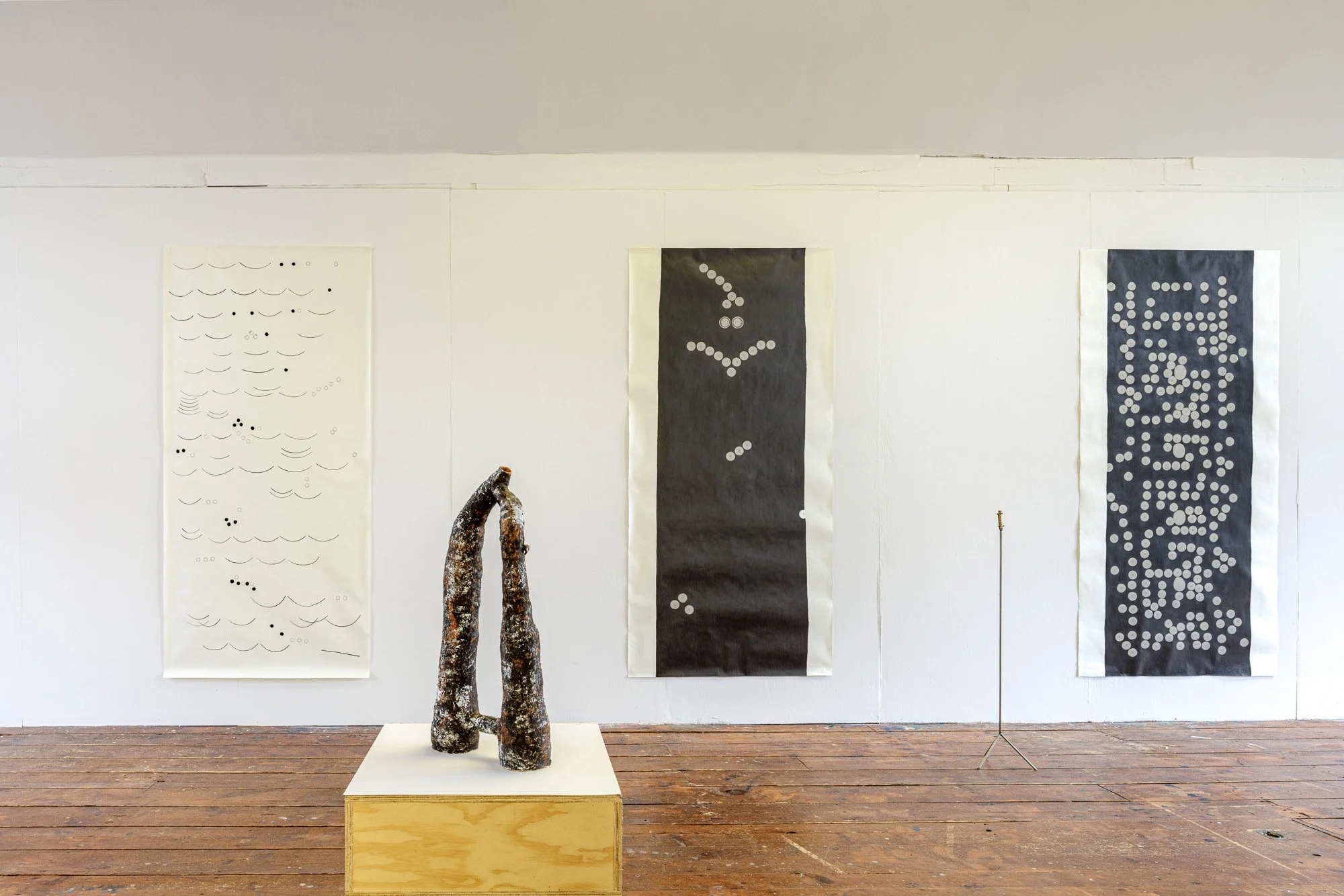
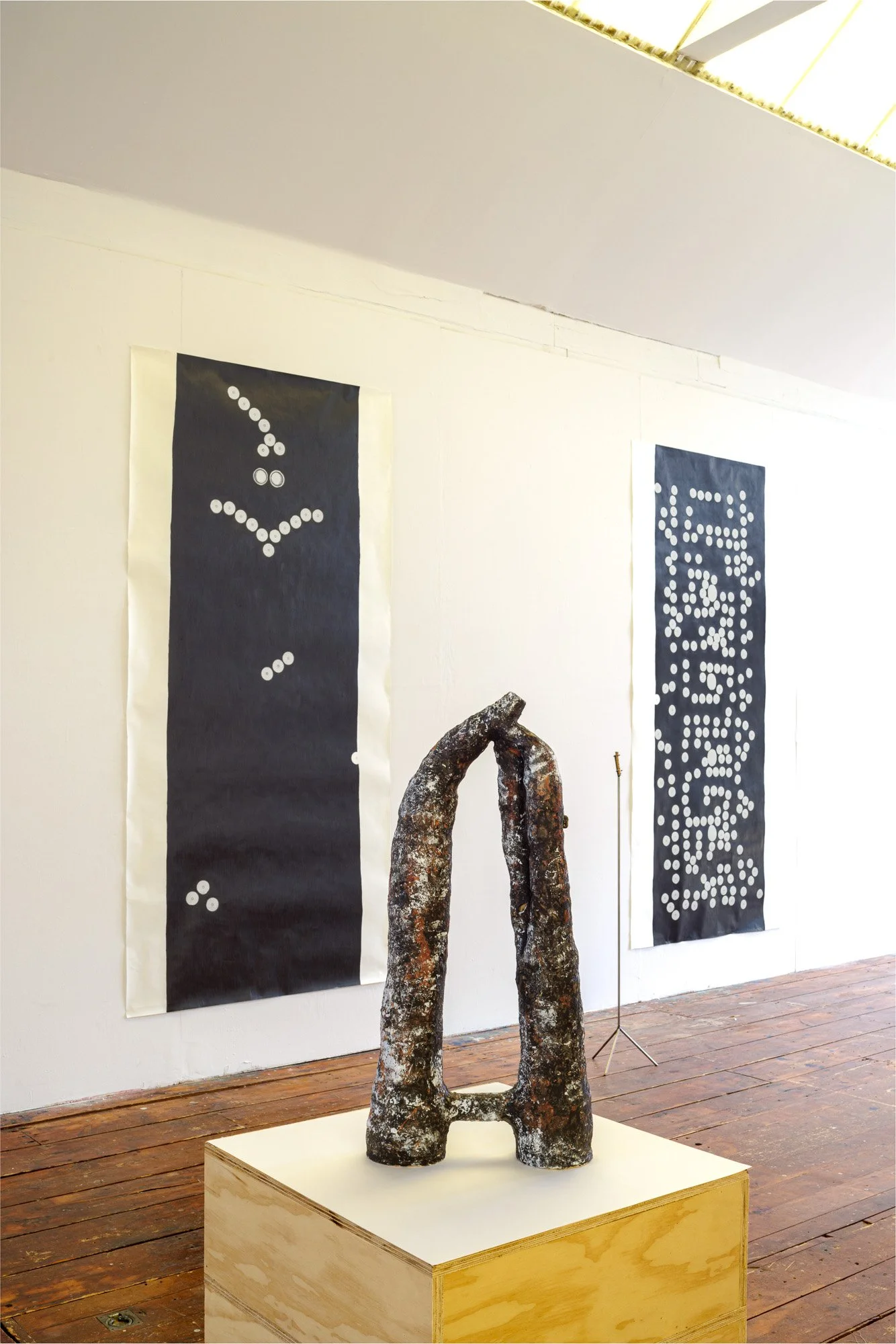
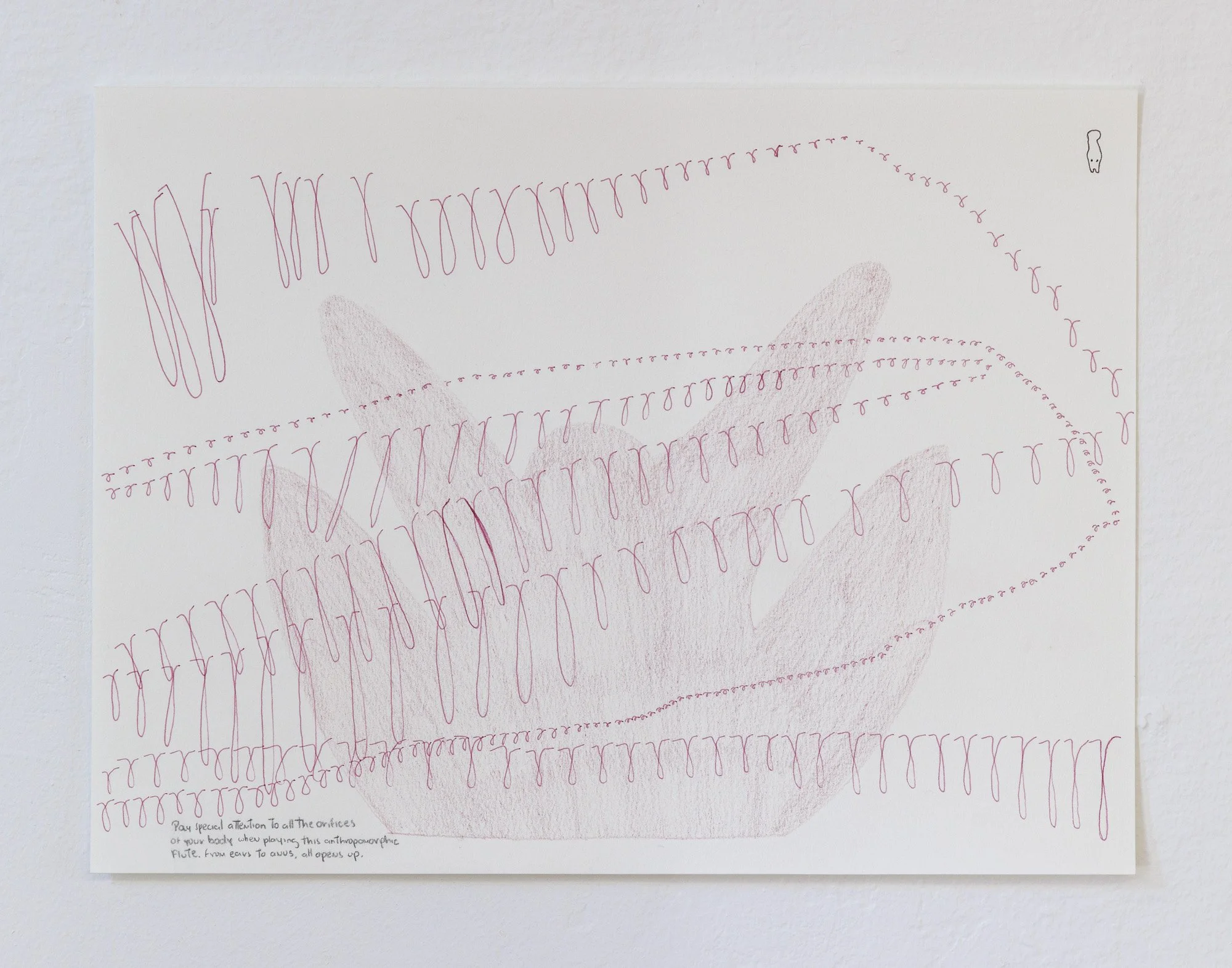
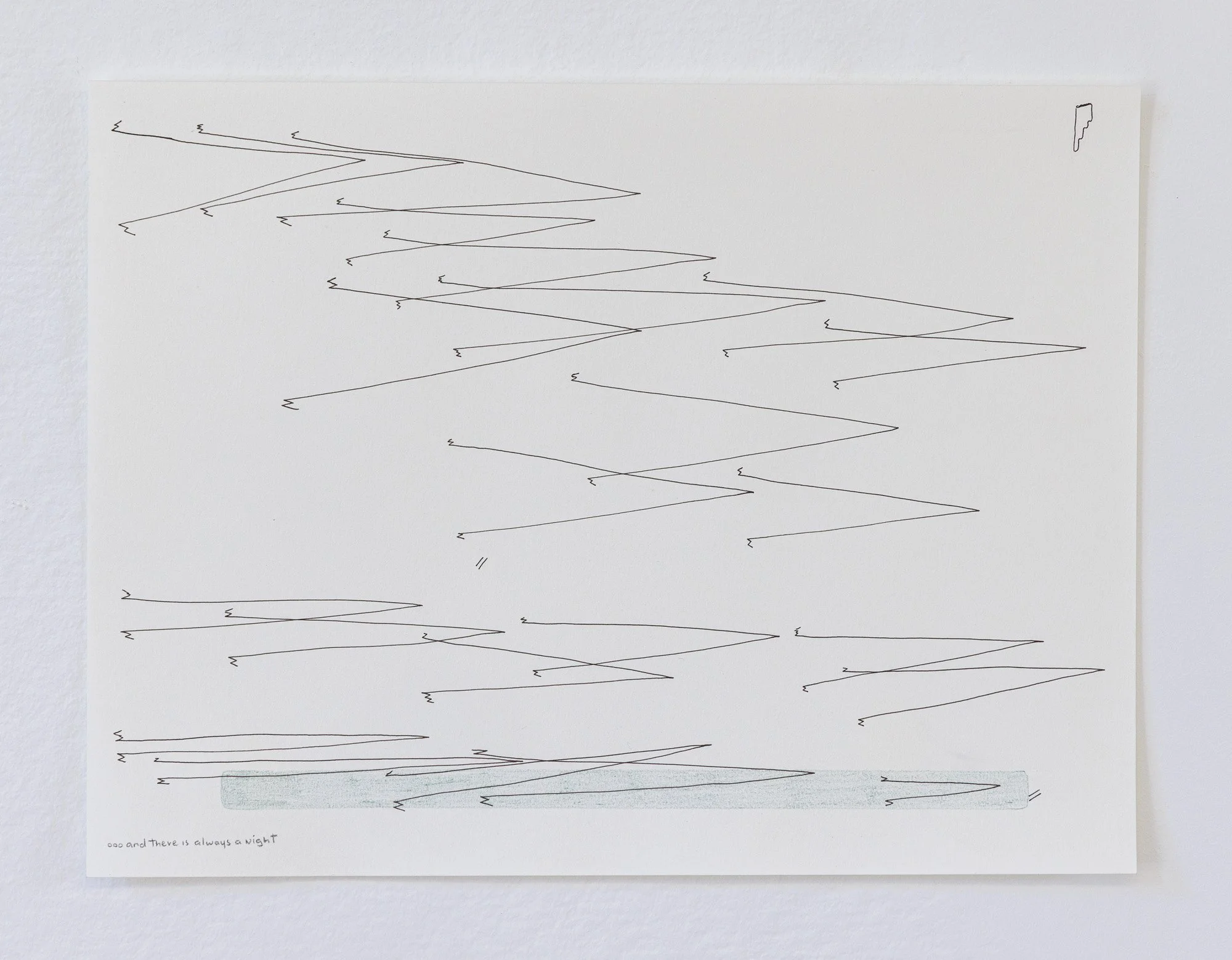
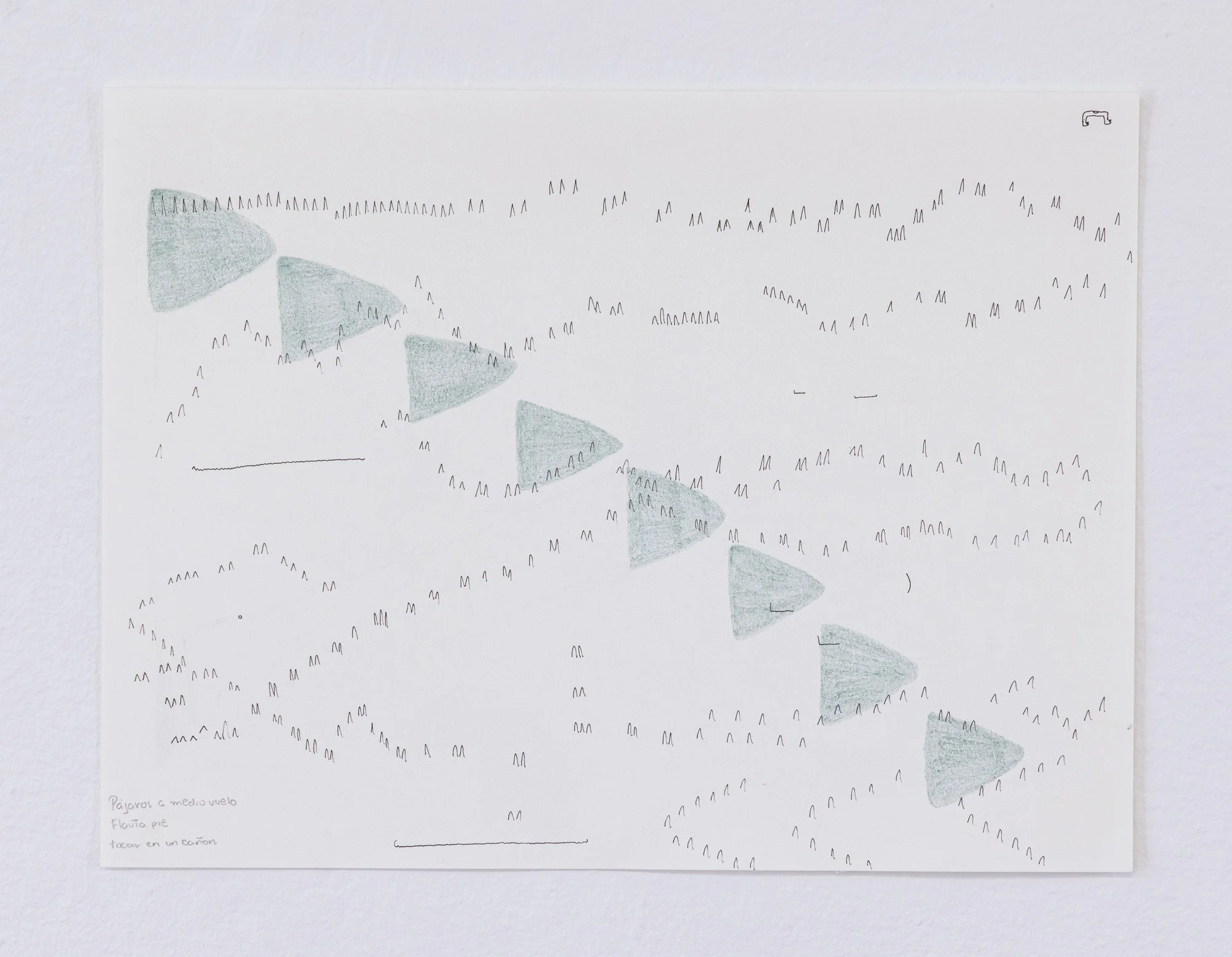
The exhibition features three large-scale drawings that reference the flute's ornamentation and its relationship to celestial mapping: one depicts the markings of the front, another highlights a constellation from the back, and a third translates the artist’s vocal response to the instrument’s sound into line. Embracing the accidental crack, Koyoltzintli introduces an arc (or broken circle) symbol into her newly composed score. In the resulting sound work, she inserts a recording of the world’s oldest living bird, an Albatross, aptly named Wisdom, to produce an interspecies duet. Through this layered system, the work entangles past and present, bird and human, instrument and breath, life and death.
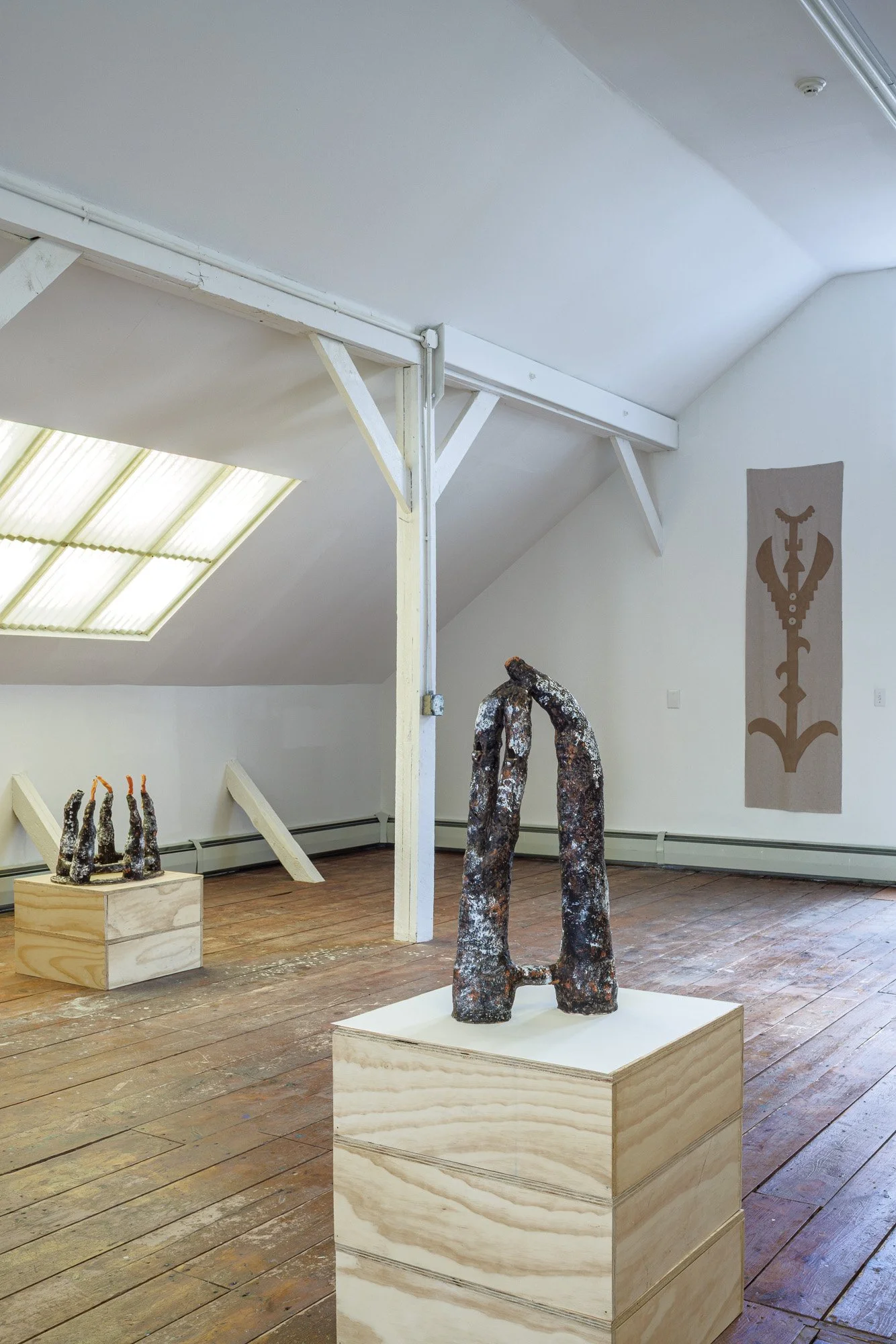
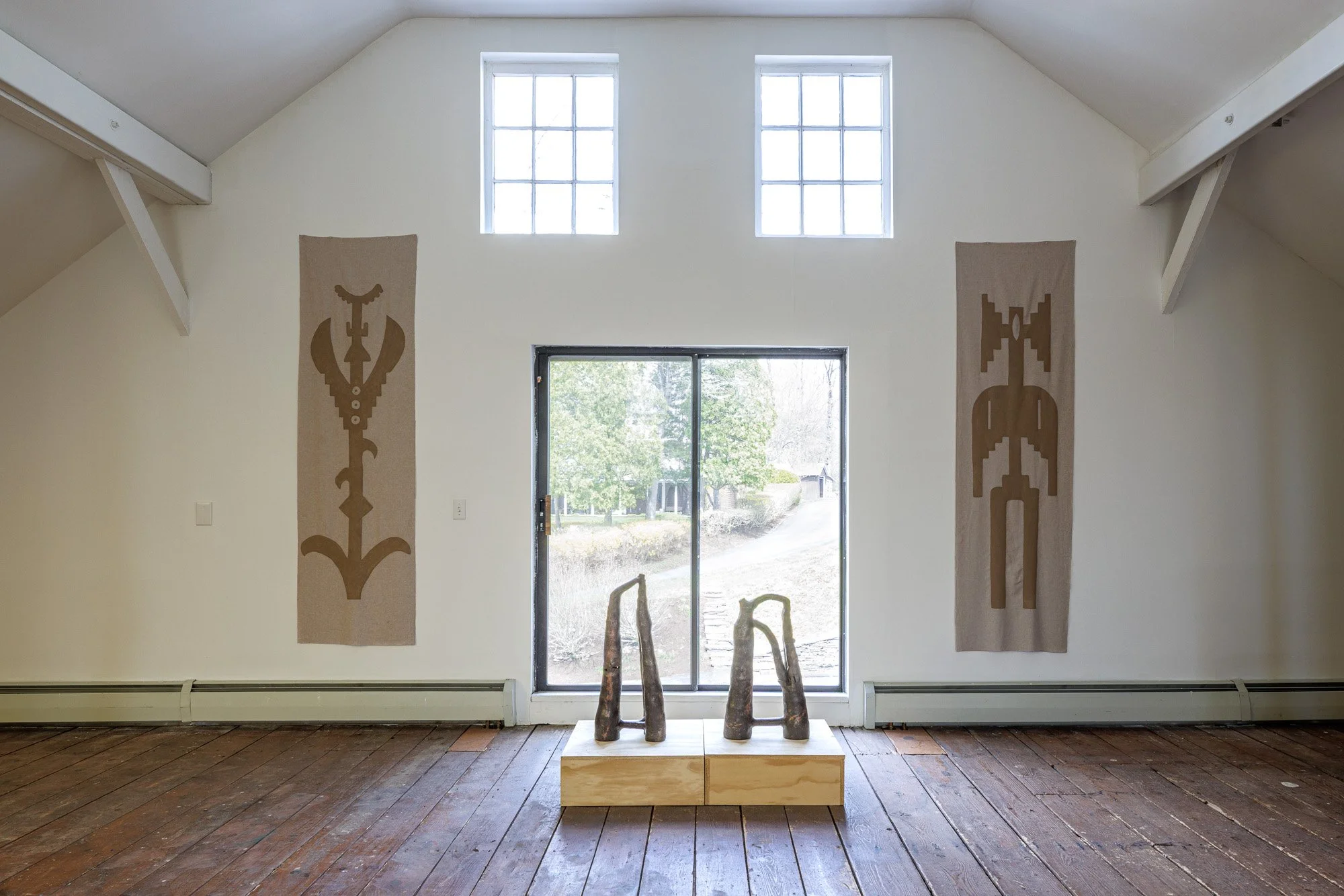
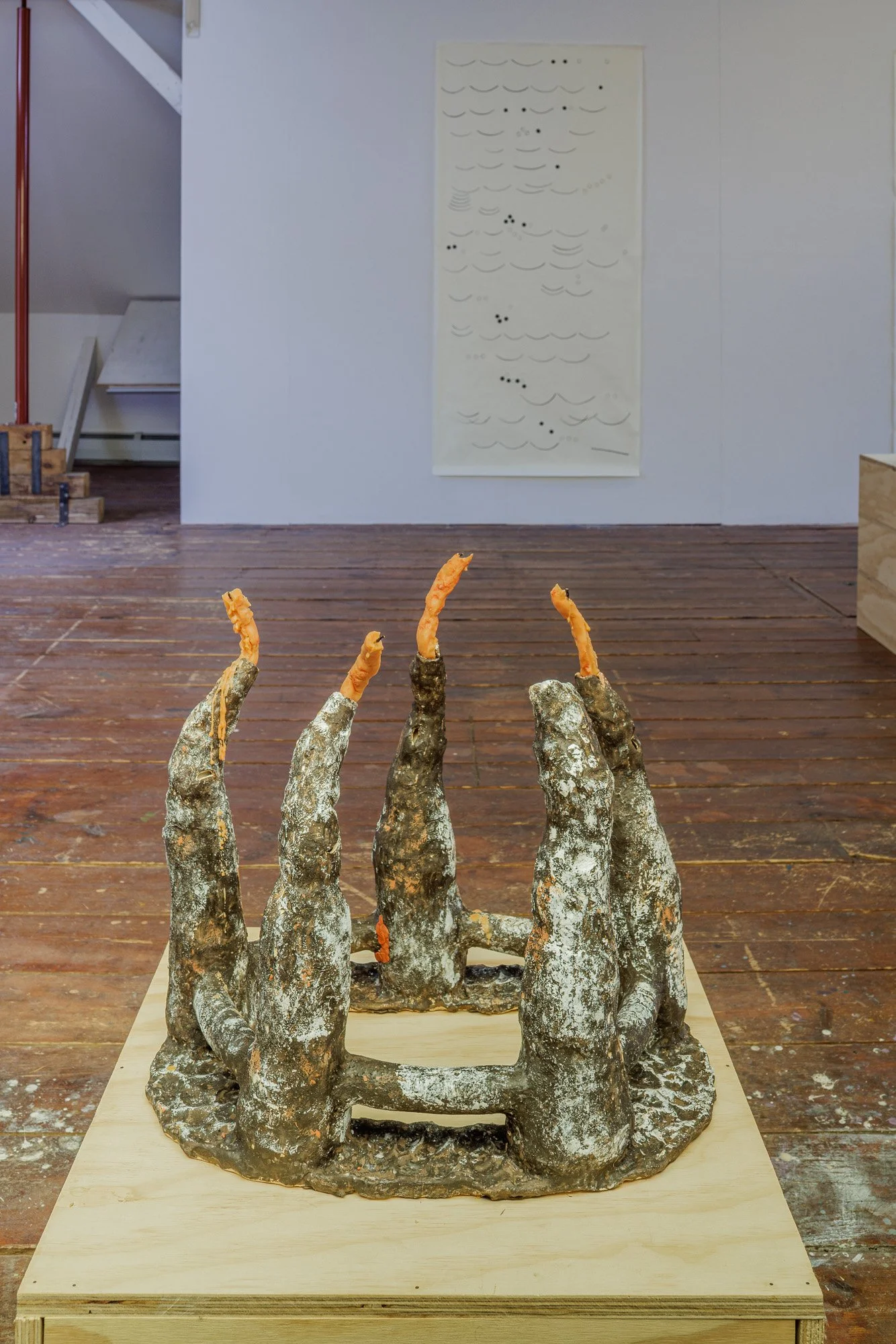
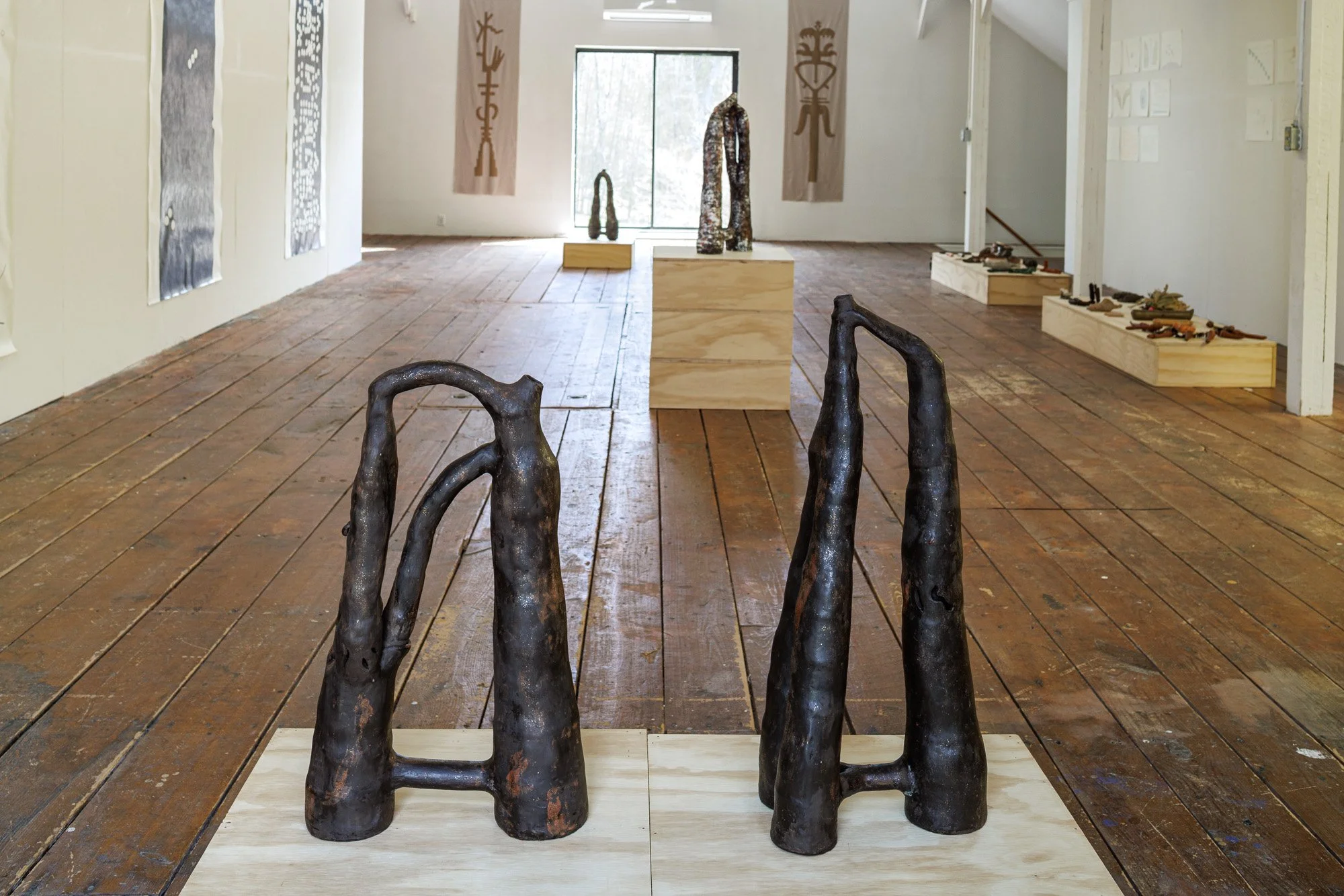
In conjunction with the works on paper, the artist is presenting a series of large ceramic whistling vessels. Developed through extensive research into Pre-Columbian sound systems, these multi-chambered vessels are designed to produce a range of low and high tones. Their forms, textured with materials such as coconut oil, beeswax and mica, resemble plant life symbolic of the foundational building blocks of our ecosystem.
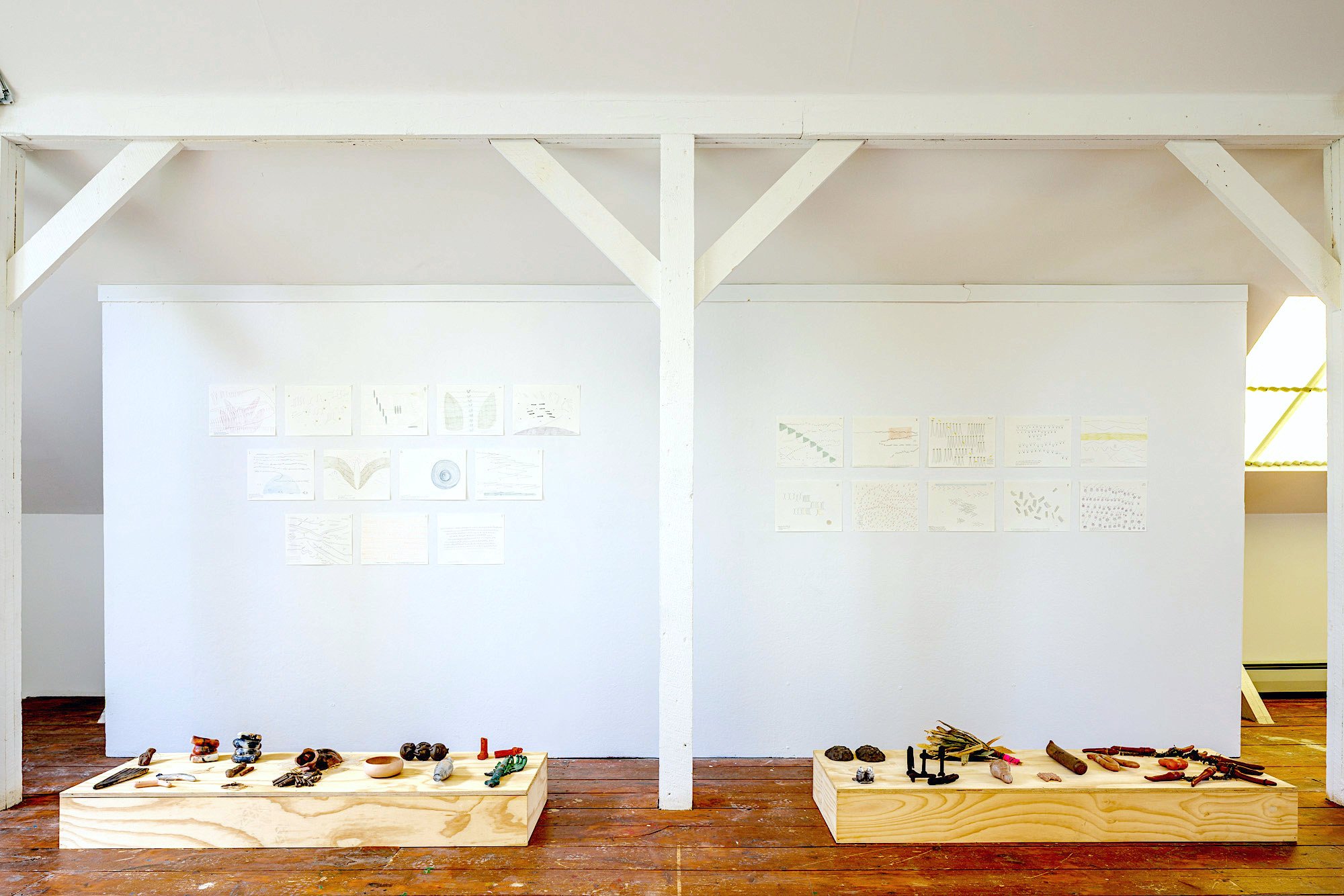
Alongside the instrumental forms, a series titled Sound Studies—drawings that visualize the instruments performed at specific sites under distinct temporal, lunar, and weather conditions—will also be presented. Koyotlzintli will activate the water whistles during a performance on May 17, 2026.
KOYOLTZINTLI is an interdisciplinary artist from the coast of Ecuador, territories her ancestors have inhabited for millennia. Working across sound, performance, and sculpture, she creates hand-built clay instruments and ritual-based installations that explore material memory, cosmology, and embodied knowledge. Rooted in research on Indigenous epistemologies of the Americas, her practice approaches clay as both sonic vessel and archival medium.
Her work has been exhibited at the National Portrait Gallery in Washington, DC, the Parrish Art Museum, Queens Museum, the Aldrich Contemporary Art Museum, the International Center of Photography, and is currently included in Musical Bodies an exhibition and publication from the Metropolitan Museum of Art. She has held solo exhibitions at Miyako Yoshinaga Gallery and Leila Greiche Gallery in New York. She is the recipient of the Anonymous Was a Woman Award, the Latinx Artist Fellowship from the US Latinx Art Forum, NYSCA, NYFA, We Women, and the Musée du Quai Branly in Paris. Her work was featured in the Native issue of Aperture. She participated in Flow States – La Trienal 2024 at El Museo del Barrio. In conjunction with her solo exhibition with River Valley Arts Collective at the Al Held Foundation, her work is included in a three-person exhibition at Autograph ABP in London.
Sign up for a tour of the exhibition using Calendly. Note, if you would like to make an appointment outside scheduled tour times or if your preferred time is booked, email us: info@RVACollective.org.