Exhibition
September 5 – October 18, 2026
Al Held Foundation
Boiceville, NY
Lukaza Branfman-Verissimo:
soaring and soaring as survival
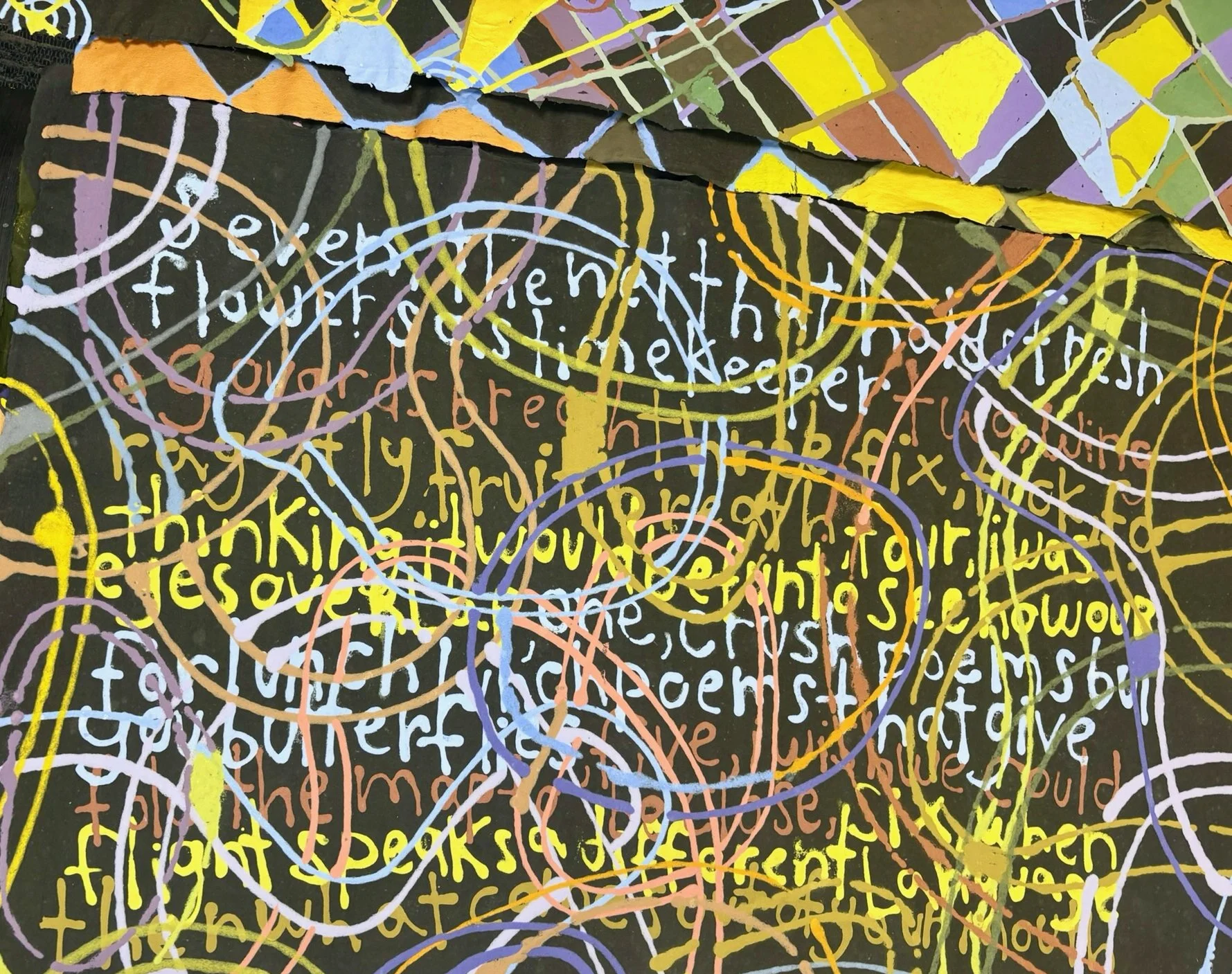
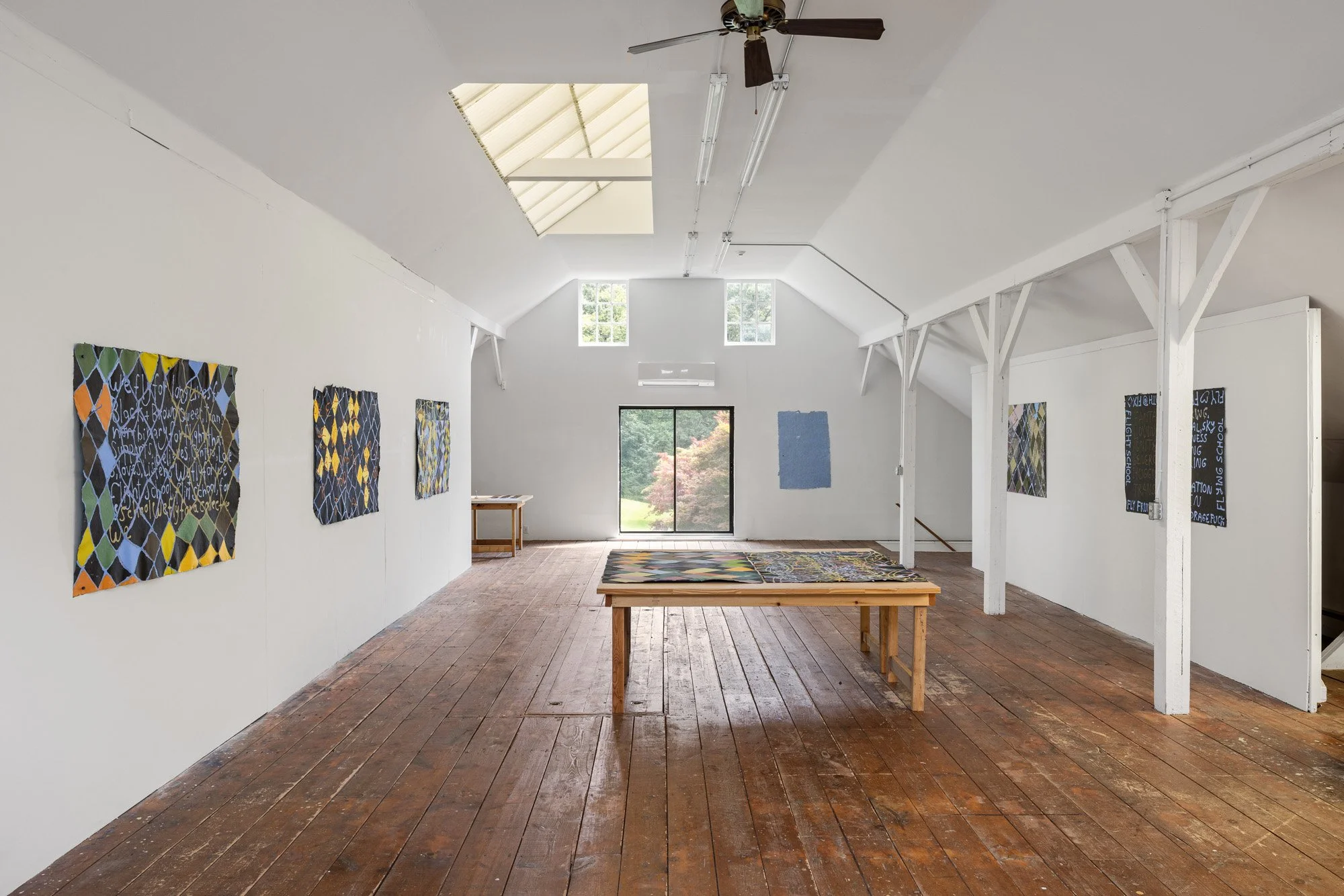
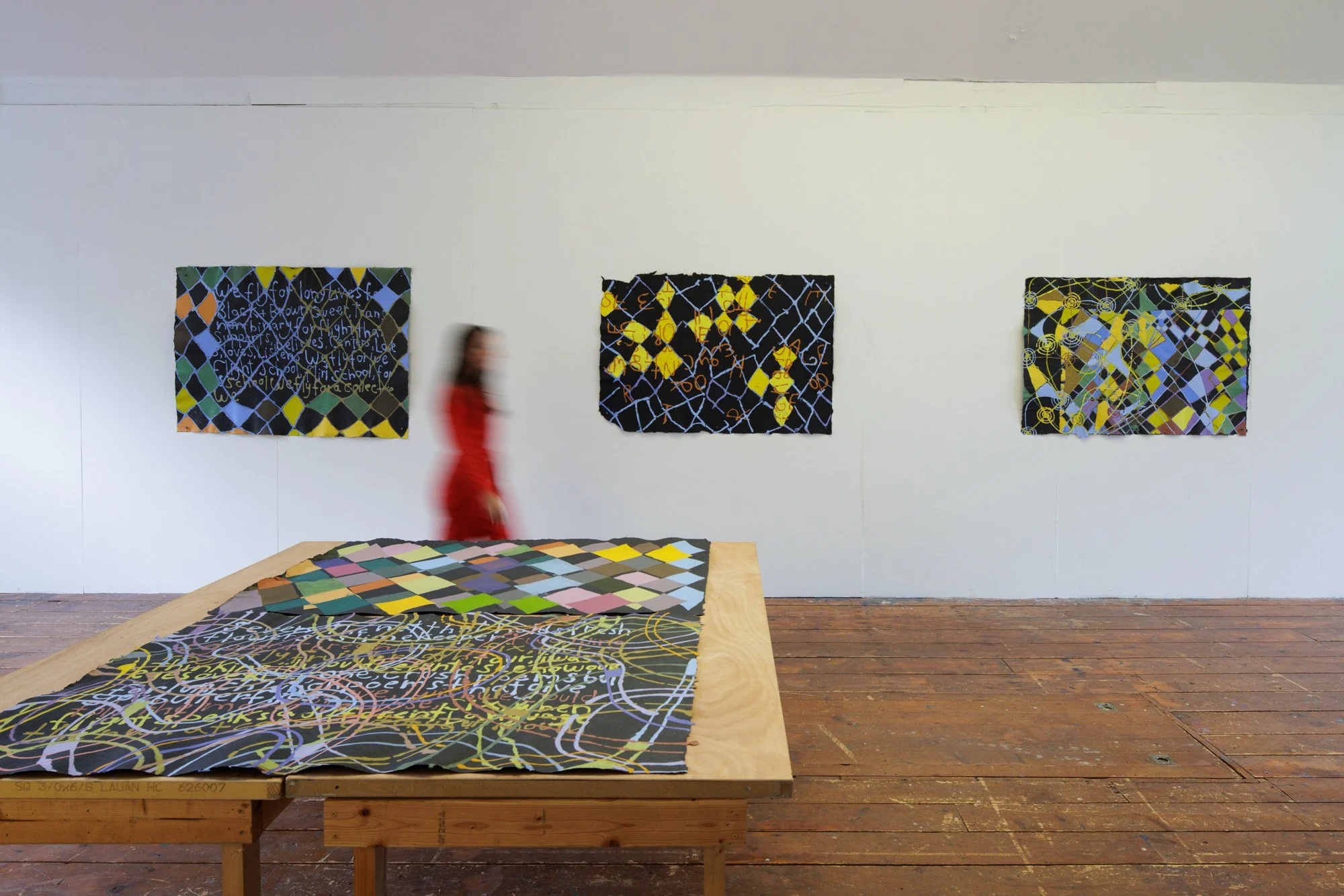
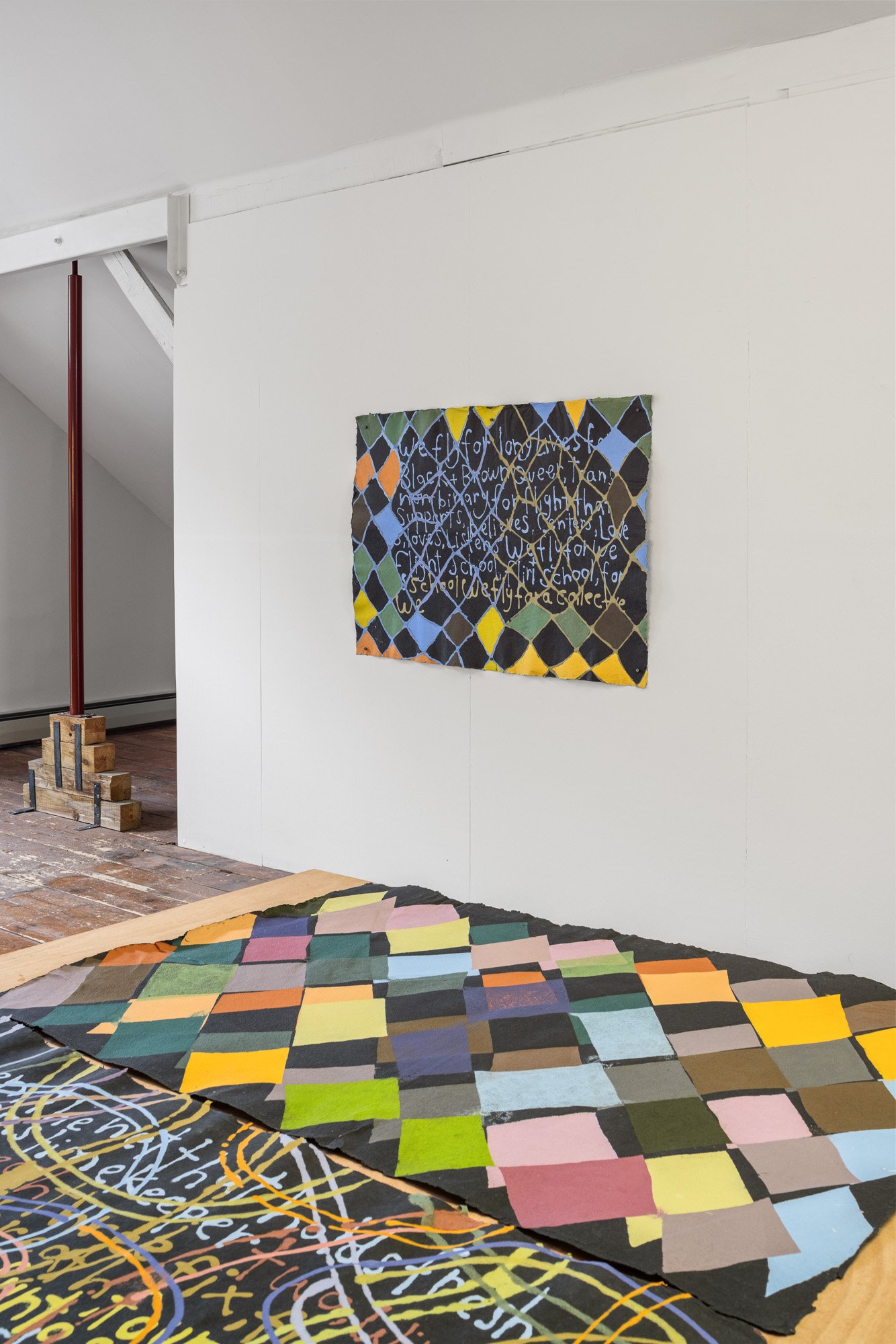
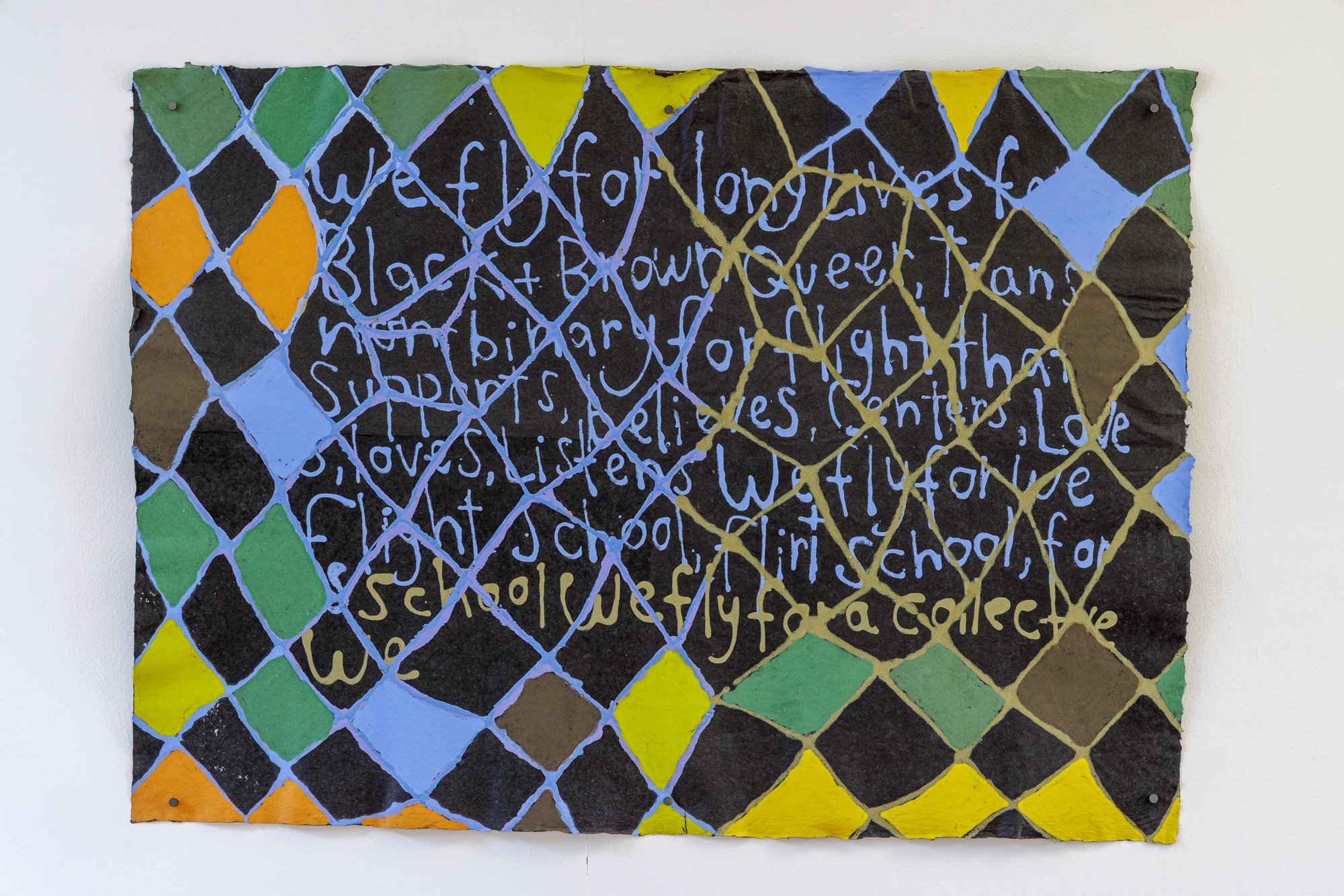
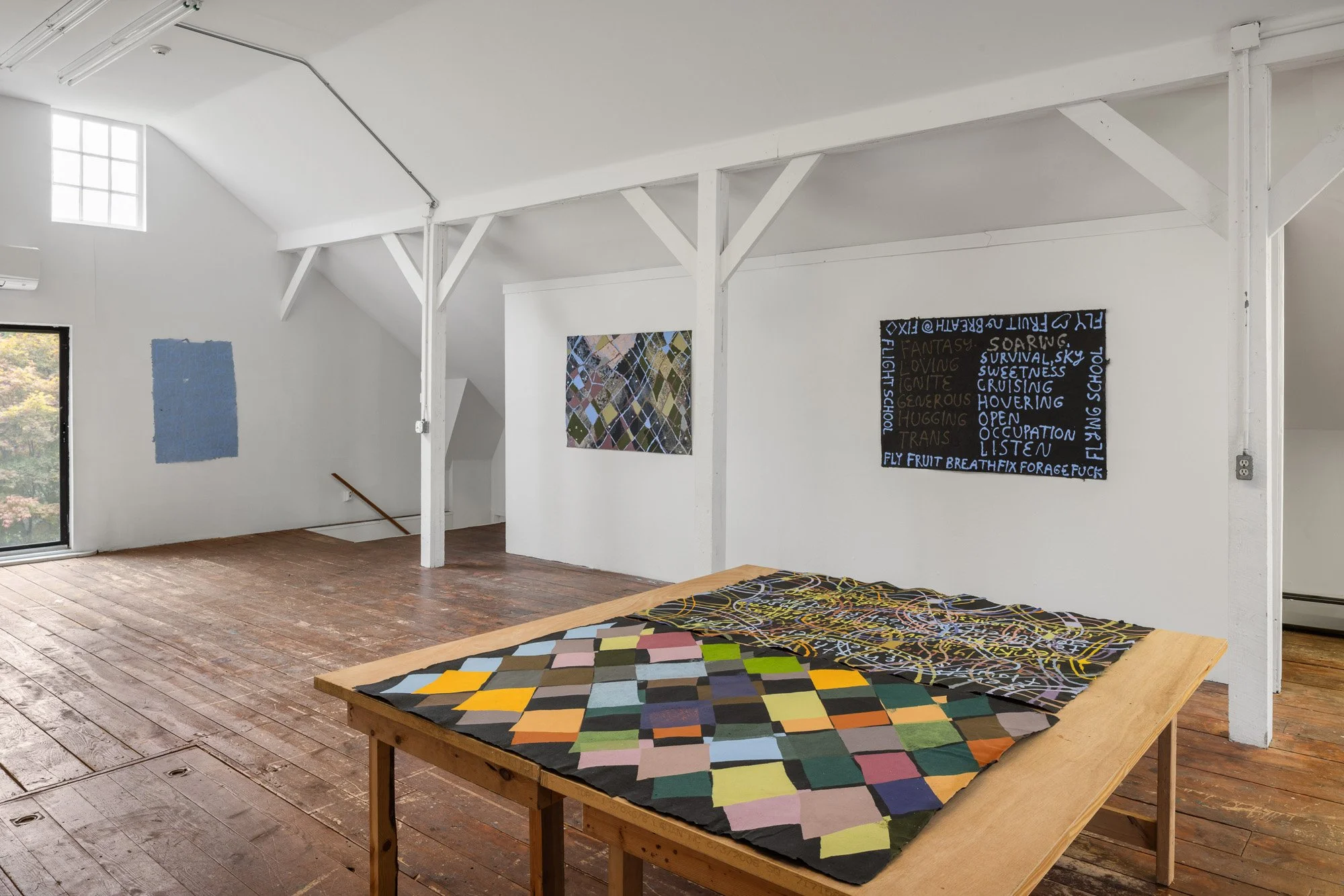
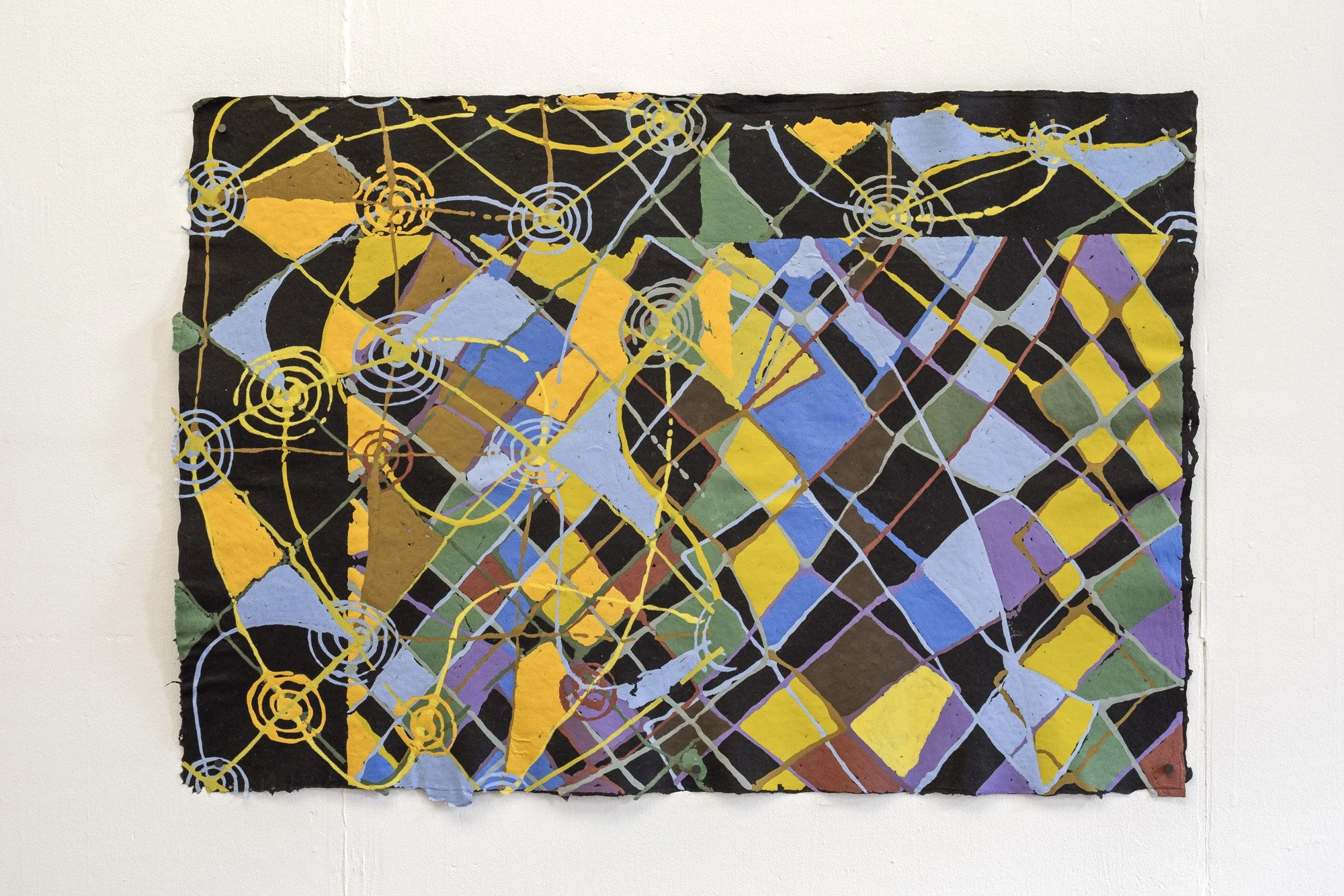
Lukaza Branfman-Verissimo, The net that holds fresh flowers as time keeper, studio image, 2026. Handmade cotton paper with pigmented paper pulp, 41 x 57 inches. Image courtesy of the artist and River Valley Arts Collective. [Brightly colored drawings made with pigmented paper pulp. Two sheets of paper are partially stacked on top of the third sheet in the foreground. Words in English dance across the paper and are intertwined and obscured by geometric hand drawn forms and shapes resembling spirals, webs and nets. Colors such as light blue, sky blue, citron yellow, forest green, brown, orange and purple, are used to make a very alive and busy feeling drawing.]
CLICK HERE to schedule your visit.
CLICK HERE to view the exhibition.
we webs rooted in flight
wings large enough to be bulletin boards
banners becoming kites
mutual aid text threads as lube for community care
care packages as beautiful as clouds before the sun sets
rage yelling the poems of today
soaring and soaring as survival
survival as abolition
loving as a net, mesh, basket, vessel
resting because Black rest is todays news
and making our own news that doesn't cause trauma but rather shares our flight stories
nuanced gusts of wind powerful enough to free them all
blowing out candles, burning it all down
(an excerpt from F.L.I.G.H.T. S.C.H.O.O.L., by Lukaza Branfman-Verissimo. Delivered as an artist talk at the University of New Mexico, NM, 2023)
River Valley Arts Collective is pleased to present a solo exhibition by Lukaza Branfman-Verissimo at the Al Held Foundation, on view from September 5 through October 18, 2026. The presentation includes a series of handmade cotton paper works, to be exhibited for the first time.
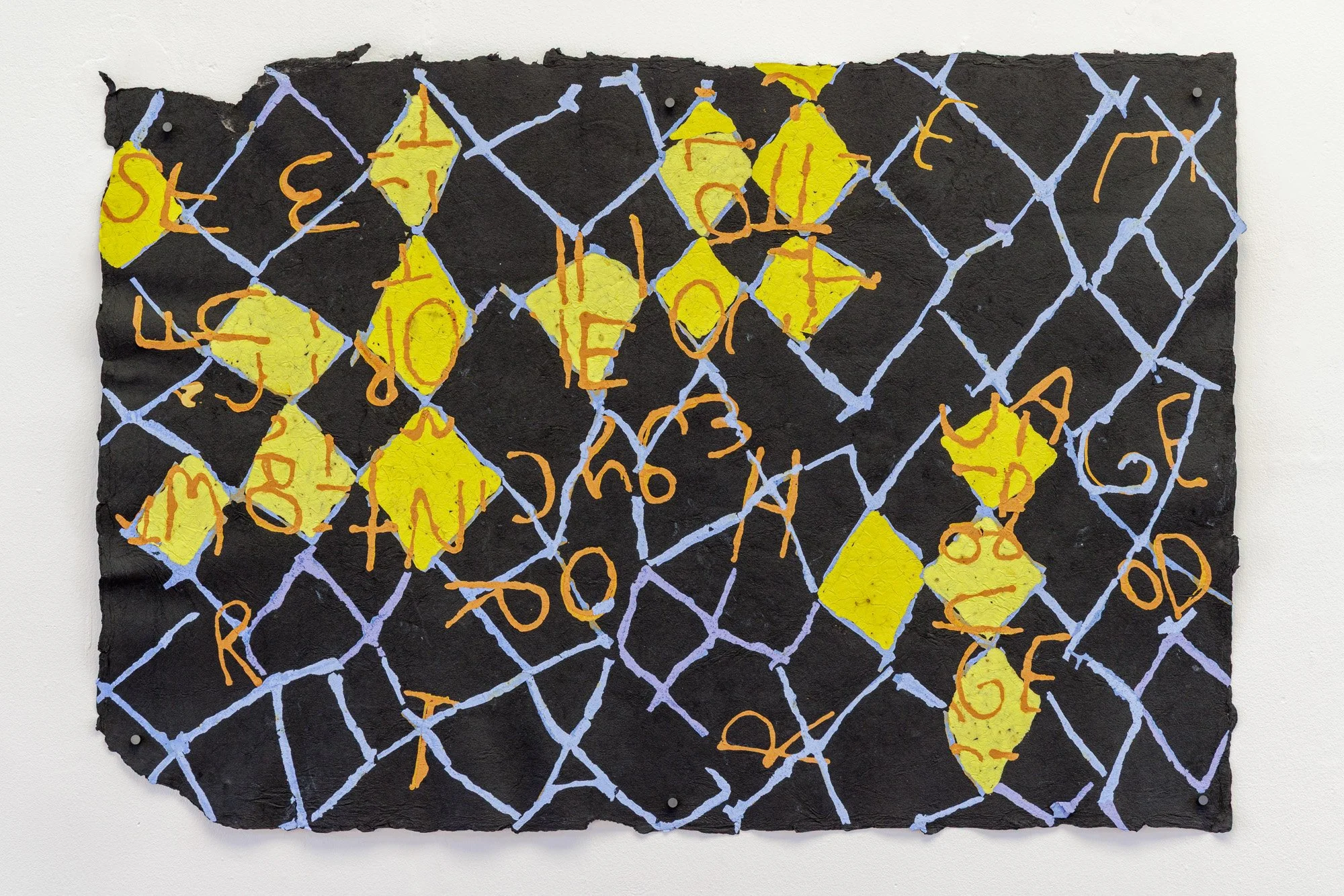
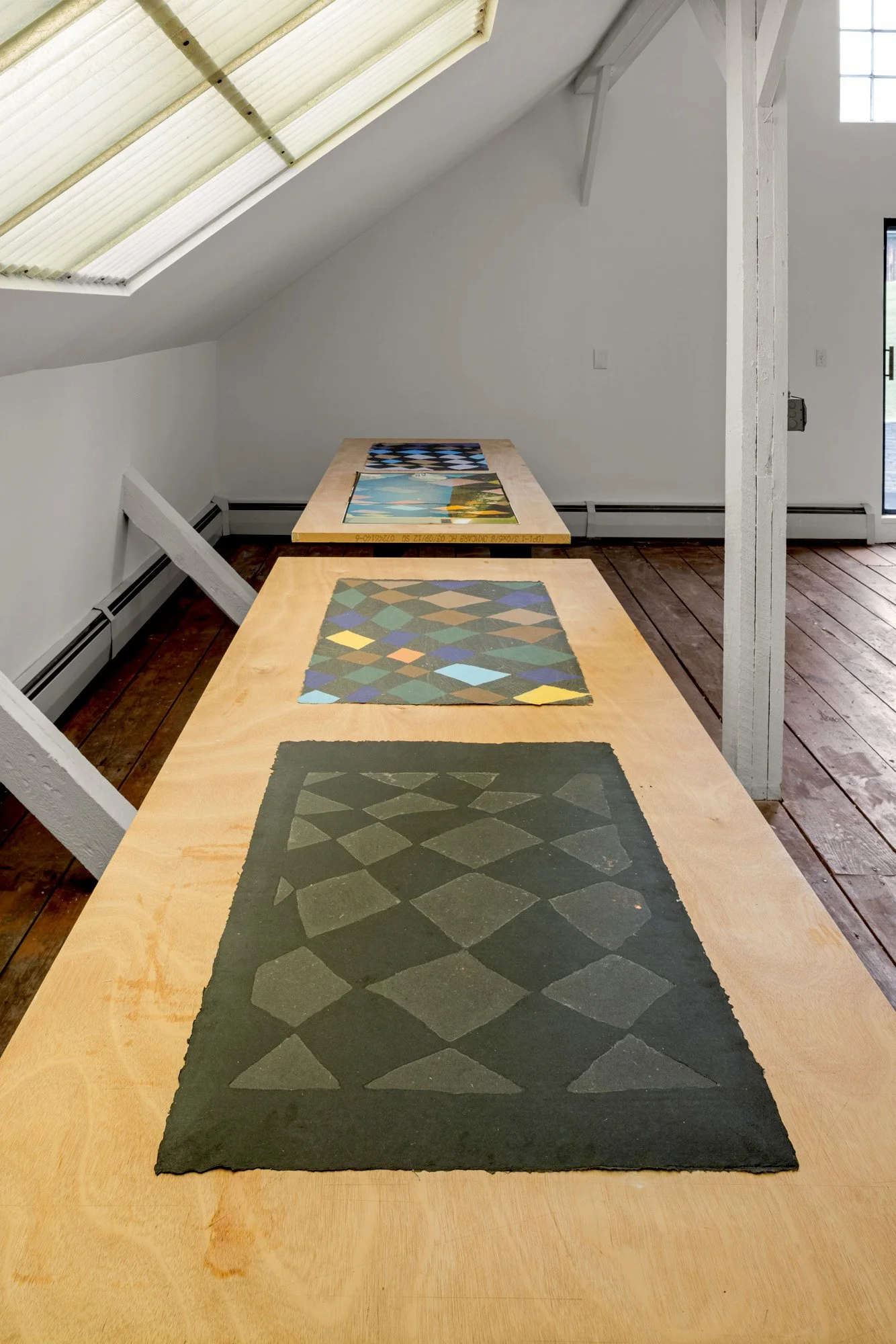
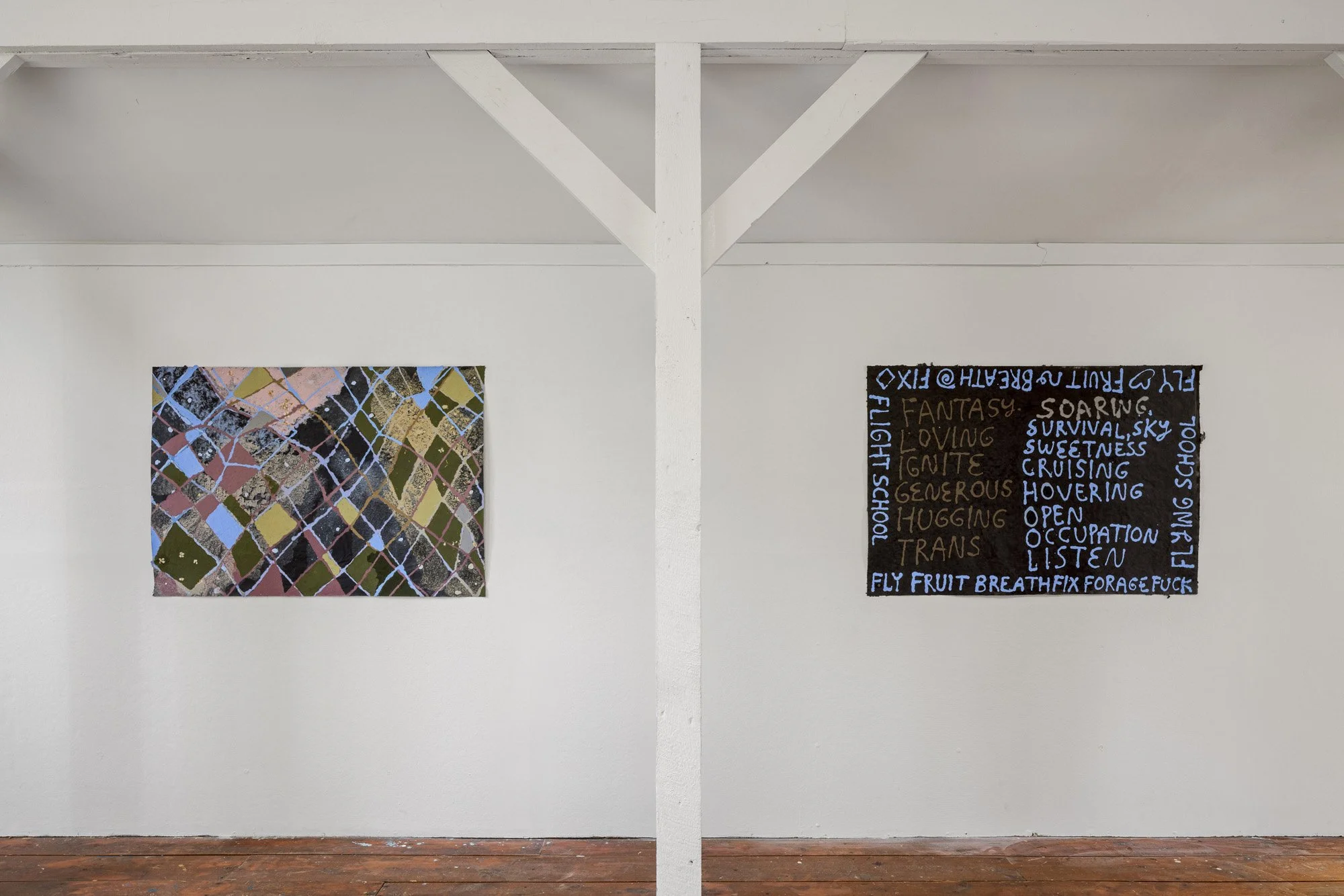
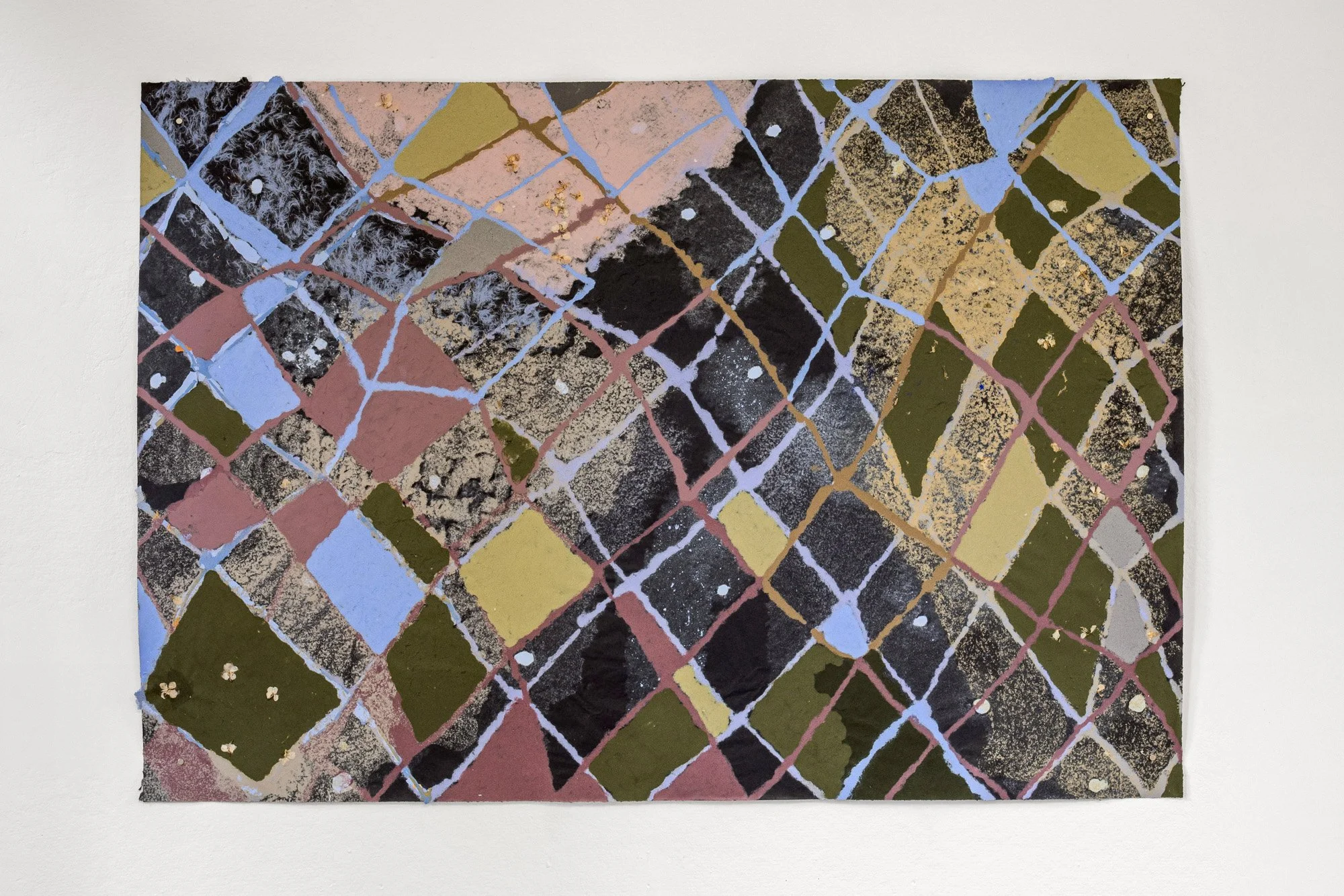
In 2023, Branfman-Verissimo created a series of handmade paper works while in residence at the Women's Studio Workshop (WSW) in Rosendale, NY. Dedicated to the production of handmade papers since 1979, WSW’s papermaking studio facilitated the large-scale sheet formation process that involves cooking and processing fibers and foraged plant matter into pulp that then becomes the basis for the paper sheets. Evident in the compositions are papermaking techniques such as double couching, where wet sheets are layered with felt on both sides to prevent sticking; inclusions, where a second layer of pulp is embedded directly into the base layer of wet pulp; and blowouts, flaws that happen when air gets trapped or water forces a hole through the wet sheet during paper’s formation. The artist strategically integrates these methods within a vast color palette of asymmetric grids and bold dissecting lines that rush, ripple and run through Branfman-Verissimo’s writing and poetry.
The compositions’ visual and textual forms extend the visual plane to propose an embodiment of an aesthetic resistance. Emitting a vocabulary of webs, nets, kites, quilts, banners and the appearance of a broken chainlink fence, the series takes inspiration from the concept of poetic narratives of Black fugitivity articulated by the cultural theorist, poet, and scholar Fred Moten. Moten conceptualizes a break, as an improvisational, ruptural space, and a collective performance of survival and future-making. The artist registers this dissonant operation of disruption and evasion in the series in order to carve out a new, spatial-temporal opening. The presentation takes the form of a project, a practice, and a set of illocutionary strategies that seek an unofficiated, underground fellowship.
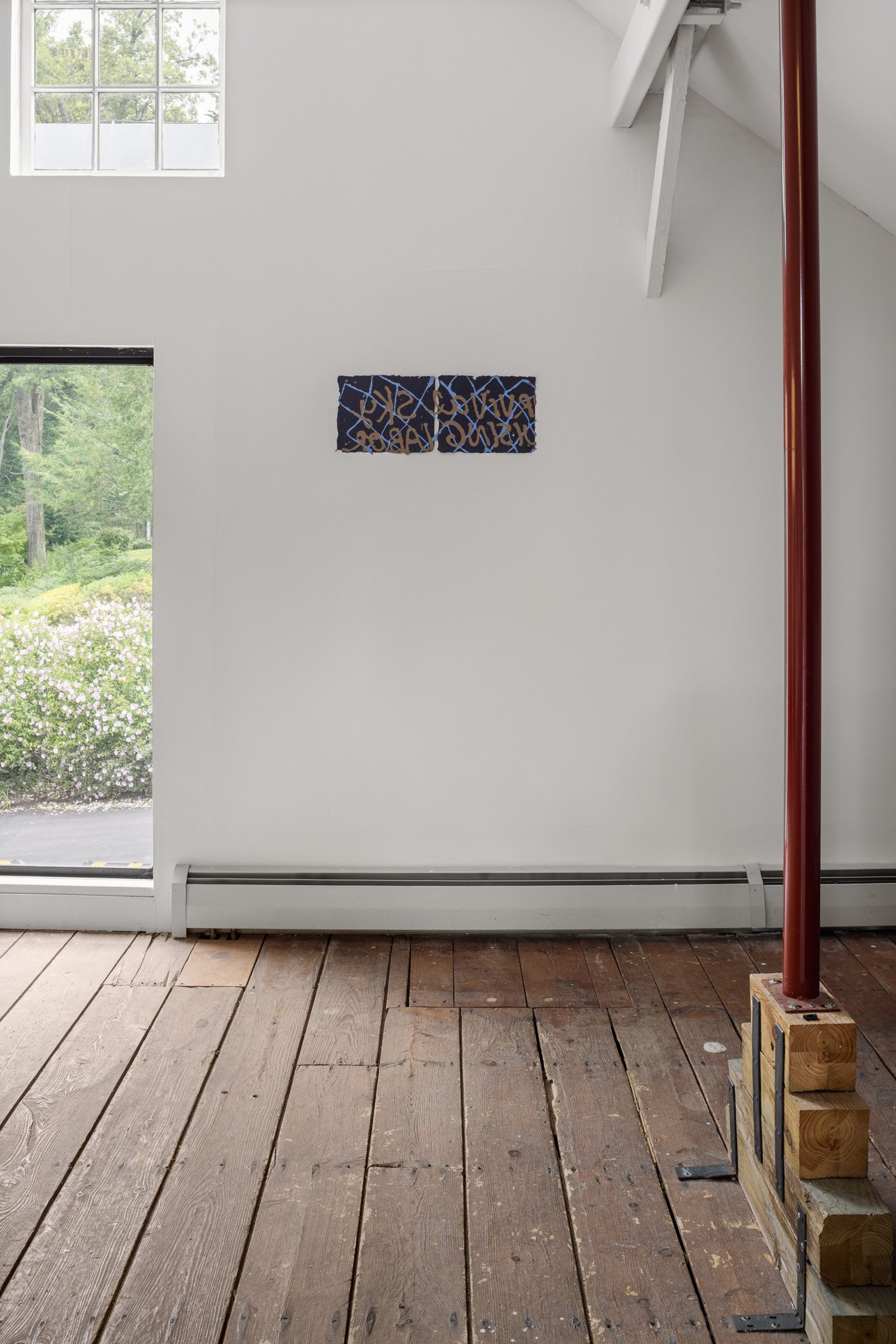
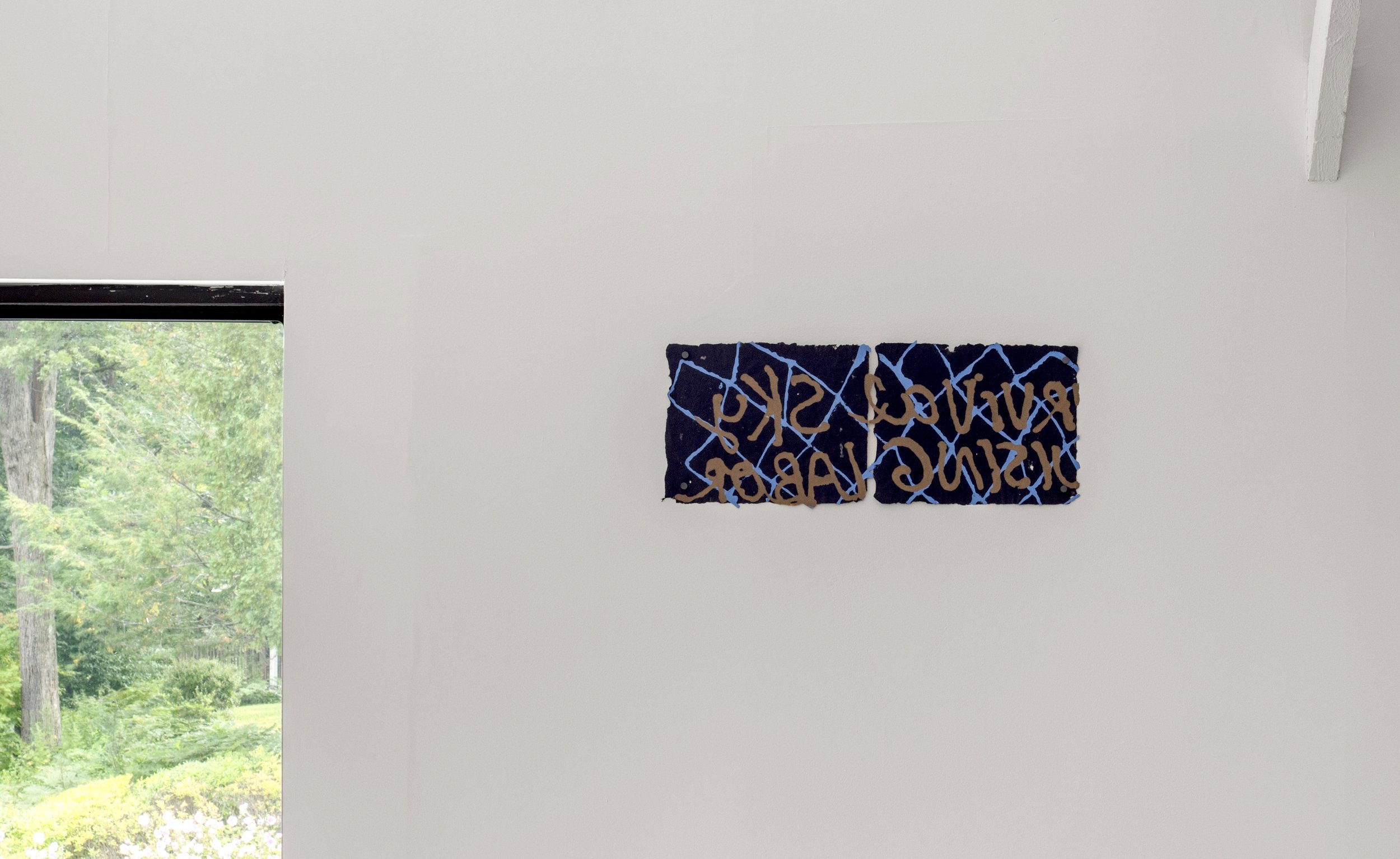
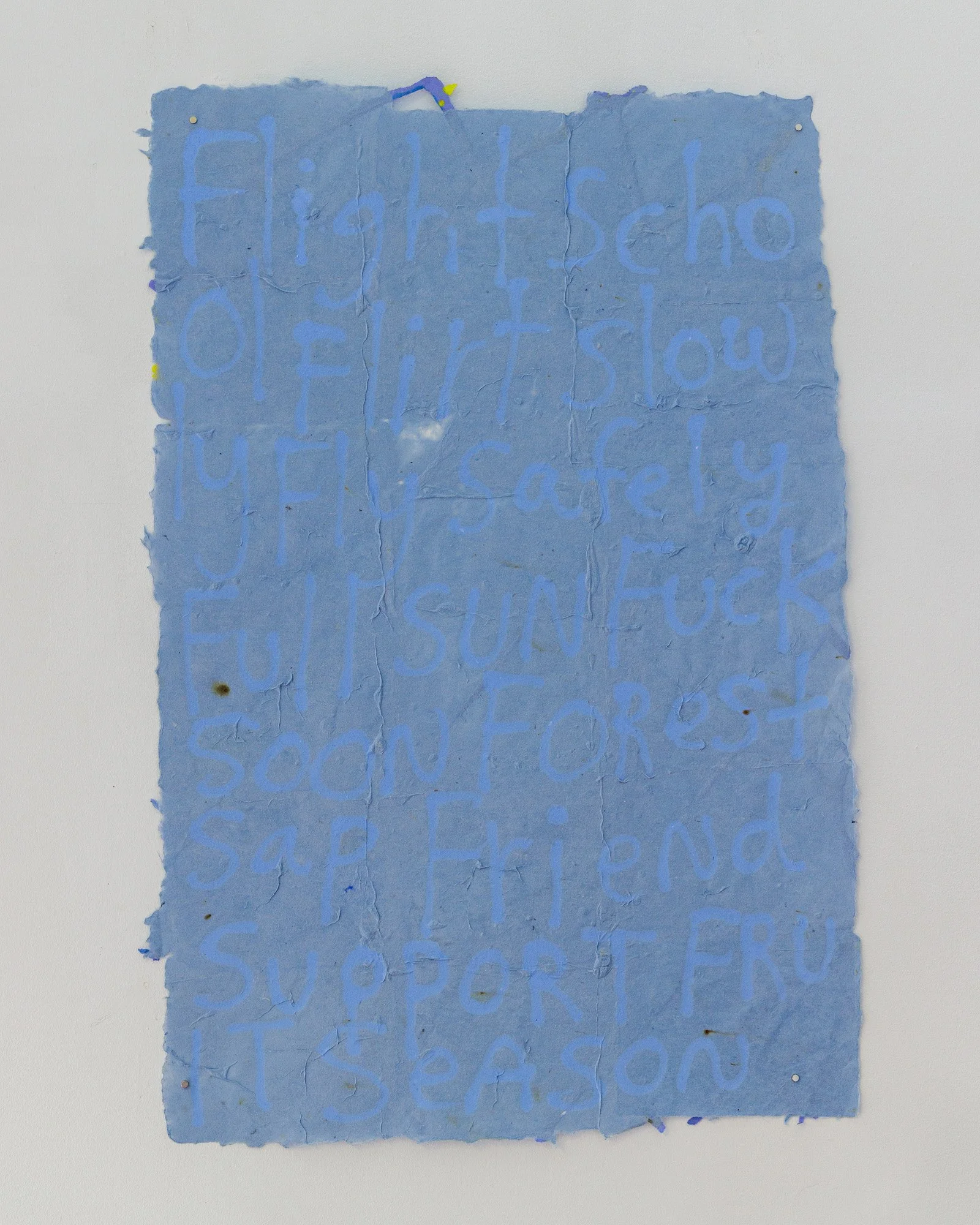
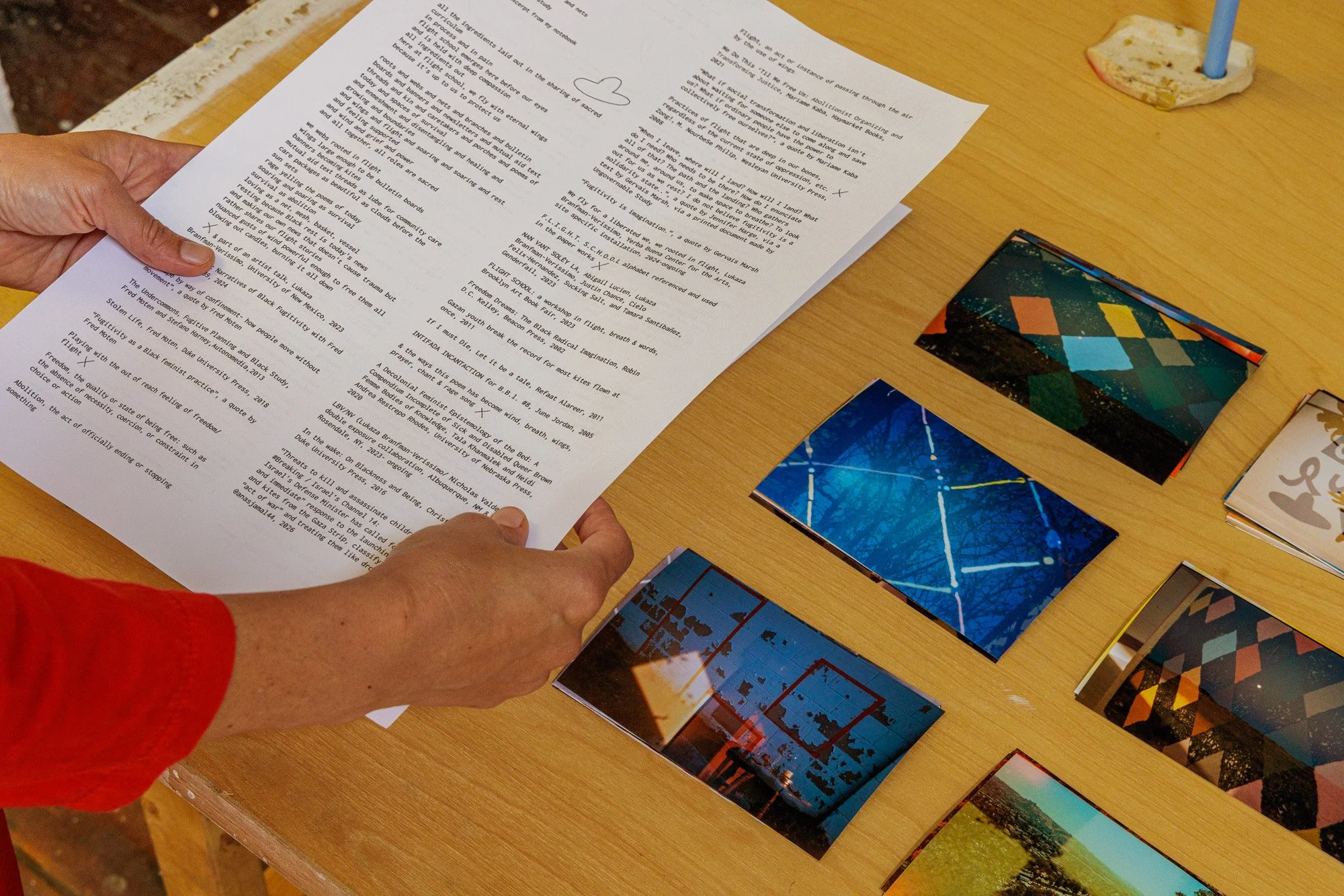
The title of the works give indication of the operations that declare unsanctioned possibilities of being and gathering such as Survival, sky, cruising, labor; ; nuanced gusts of wind powerful enough to free them all; and flight school, flirt slowly, fly safely, full sun, fuck soon, friend support, fruit season. F.L.I.G.H.T. S.C.H.O.O.L., is an ongoing body of work and inquiry that the artist developed as a Frederick Hammersley Visiting Artist Fellow at the University of New Mexico. While residing in Albuquerque, they produced multiexposed photographic images that merge Branfman-Verissimo’s paper rendered topologies with photodocumented sites and geographies of New Mexico.
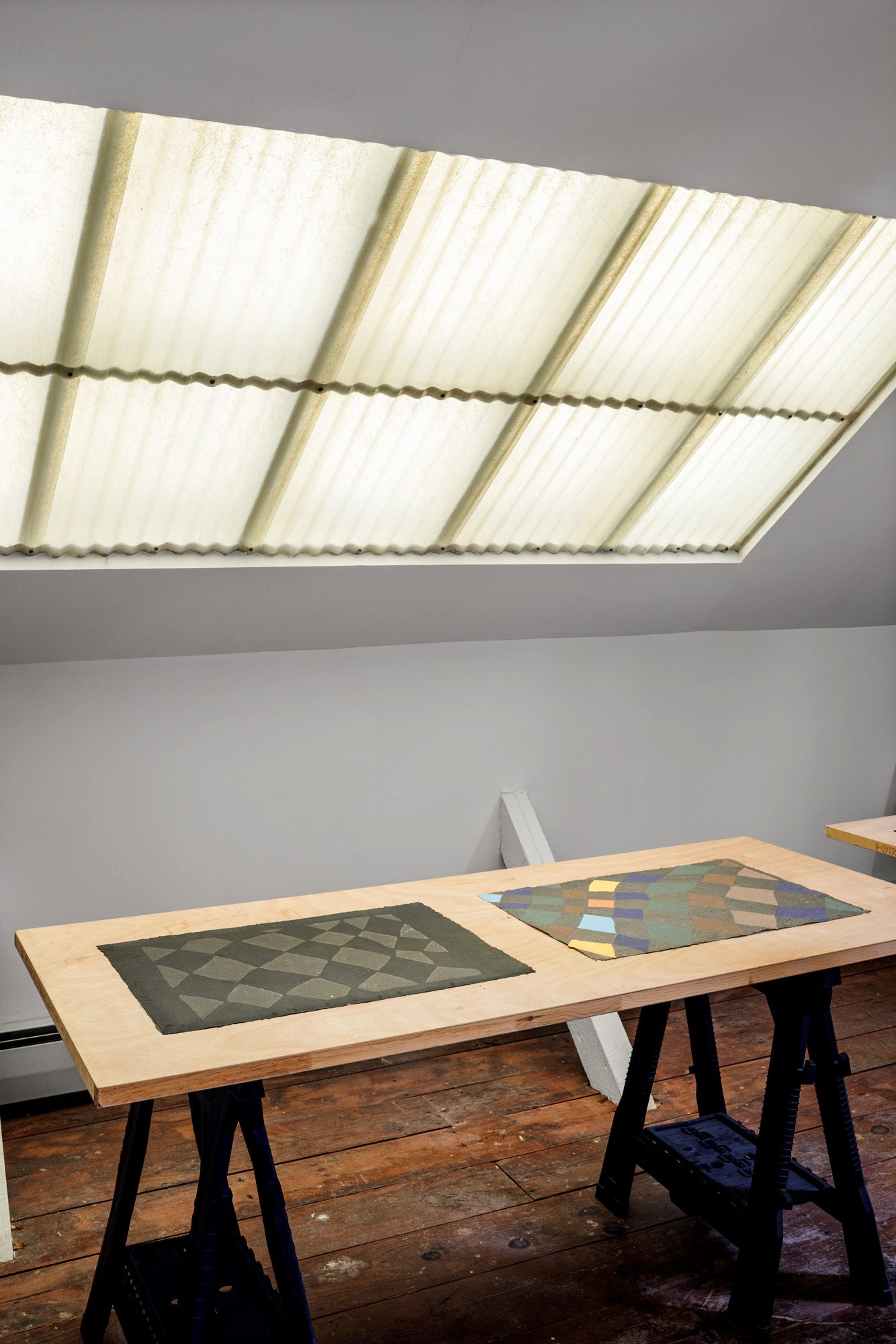
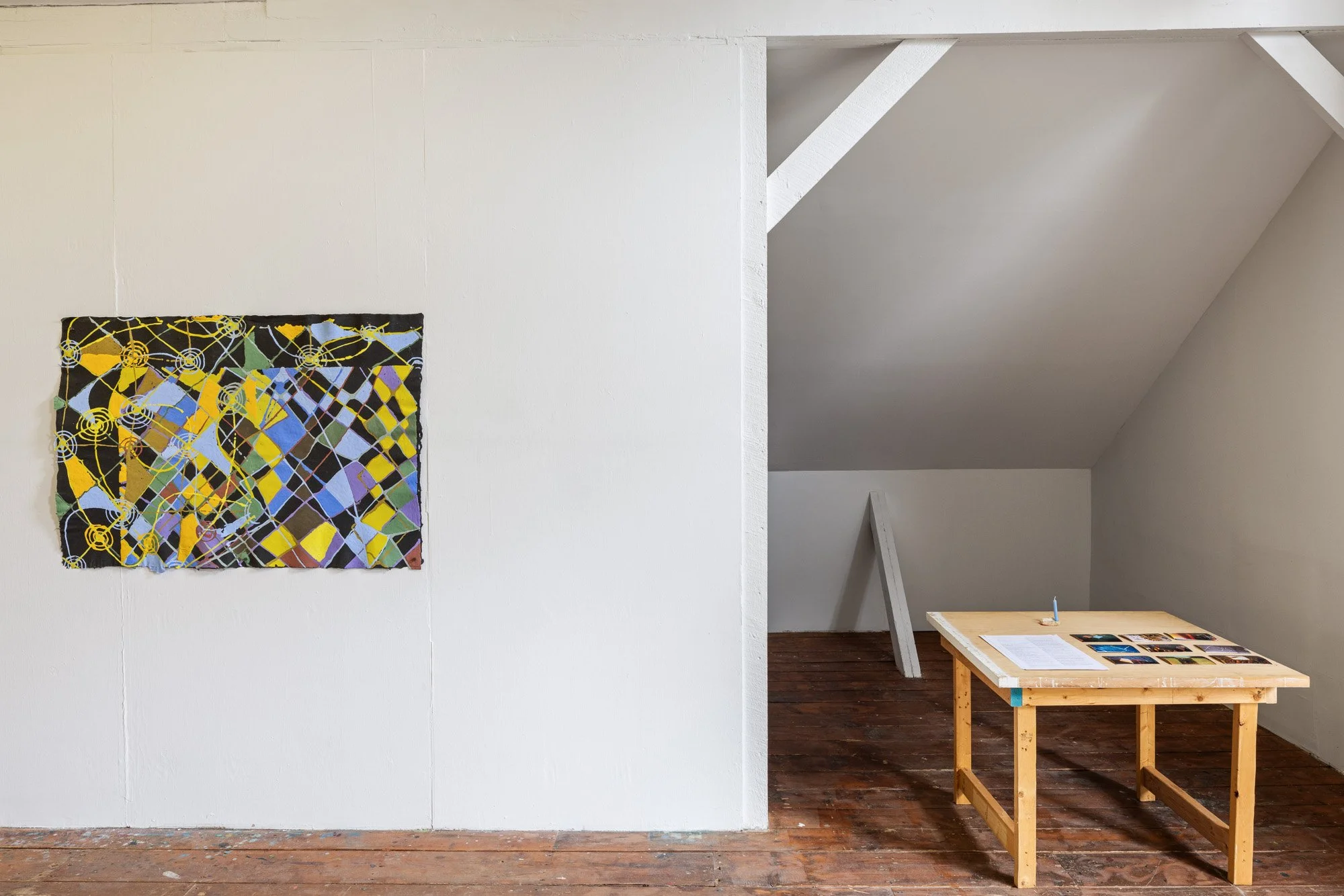
In keeping with the multivalent and multiauthored space, the installation itself assumes a horizontal logic. Several works are displayed off the wall, laid down on tables. Shown alongside large paper works, is a bibliography designed by the artist – available to takeaway – and digital prints that can be handled. This exhibition strategy pays homage to the process of learning and foregrounds ways in which being "in study" of material, living, and liberatory future making is a practice and an act, key in F.L.I.G.H.T. S.C.H.O.O.L. Collectively, the handmade paper works and photographs build on the artist’s multi-positionality and weaving of form and practice. Art historically, artistic application of the grid has been said to hold the potential to stretch infinitely outward while autonomously mapping inward to meet its own physical boundaries. Branfman-Verissimo’s vision for an active, social and improvisational practice extends and assembles that radical webbing as expressed in their own words, “A practitioner of the web, I am called to that form because that’s the way it's always been, that's the way I root, the form that holds our multitudes and sets us free.”
LUKAZA BRANFMAN-VERISSIMO is an artist, abolitionist, educator, storyteller and person of multitudes who lives and works on the unceded lands of the Schaghticoke, Mohican and Munsee Lenape people (also known as the Hudson Valley, NY). Through a practice based in the printed multiple, community-based work, performance and installation building, they invite the viewer to recall and share their own lived narratives, offering power and weight to the creation of a larger dialogue around the telling of Black, Indigenous, Queer, Trans, People of color’s stories. Branfman-Verissimo's work has been included in exhibitions and performances at the Institute of Contemporary Art at Virginia Commonwealth University, California African American Museum, MOCA Cleveland, Smith College Art Museum, Konsthall C, San Francisco Arts Commission, Leslie Lohman Museum of Art, and L’Internationale Online, amongst others. They had solo shows at September Gallery, Amherst College, Deli Gallery, Roll Up Projects, Yerba Buena Center for the Arts and Printed Matter Inc. Their artist books and printed editions have been published by Cripple, Endless Editions, Childish Books, Ghost Proposal, Press Press, Center for Liberatory Practice & Poetry, Printed Matter Inc and Wendy’s Subway. Their work has most recently been supported by a Wynn Newhouse Award, Mid-Hudson Valley Arts Council and Frederick Hammersley Visiting Artist Fellowship. Lukaza got their BFA at California College of the Arts and MFA from Virginia Commonwealth University. They facilitate spaces of learning and exchange at the School for Poetic Computation and Bard College.
Organized by Olga Dekalo in partnership with the Al Held Foundation. Over the past six years, River Valley Arts Collective has presented exhibitions in Held’s former drawing studio, outdoor installations on the foundation's grounds and, more recently, performances in Held’s painting studio.
The Al Held Foundation premises are historic and therefore do not fully conform to ADA accessibility guidelines. The exhibition is up two flights of stairs and not wheelchair accessible. The painting studio is located on the second floor and can be accessed from a garage-like storage space with a rough cement floor that has four steps with no handrail. There is a non ADA accessible gender neutral single occupancy restroom located on the second floor/ same level of the painting studio. The floor texture on the second floor is smooth and made of enamel. The drawing studio is located on the third floor and is where the exhibition is located, which is 11 steps with a handrail. The floor texture on the third floor is fairly smooth and made of thick panels of wood. Seating with backs will be set up for use throughout all the floors. The most accessible parking spots are anywhere from 5 to 25 feet away from the studio entrance. Other parking spots are up to 100 feet away from the building’s entrance and can be reached by walking across a mostly flat paved asphalt parking area with a slight incline before accessing the building.
Please contact us ahead of your visit if you have additional access questions/needs, at info@rvacollective.org. Dogs and other pets are not permitted on the premises, even if left in cars. Licensed service animals are permitted with prior approval. To ensure equitable access, masks will be provided and required to be worn in all interior spaces. Thank you for keeping the community safe!